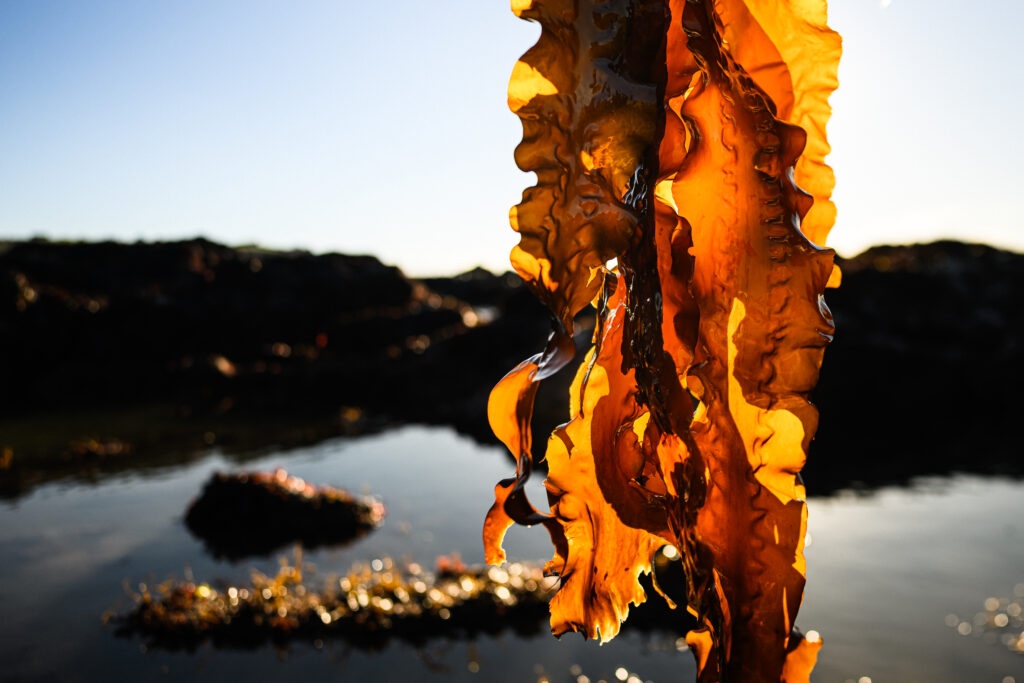
A new marine licence has been approved for an innovative project aiming to revive British kelp beds.
This is the first time the Marine Management Organisation (MMO) have granted a marine licence for kelp restoration activities in the UK.
Kelp forests are vital to marine ecosystems providing habitat, food, and breeding grounds for marine species, while also supporting fisheries and recreational opportunities like diving.
To protect British kelp species from climate change and biodiversity loss, scientists from the Marine Biological Association (MBA) and Newcastle University aim to develop and test a tool kit of approaches to help futureproof kelp habitats.
Juvenile native kelp (Laminaria hyperborea) will be grown in laboratories and attached to small stones – known as “green gravel” – before being placed back into the sea.
Scuba divers will mark and monitor the restoration plots to examine kelp growth and survival rates, and the retention of the green gravel substrate itself.
MBA Senior Research Fellow Dr Dan Smale and PhD Student Cat Wilding who study the structure and functioning of vital coastal habitats such as kelp forests and seagrass meadows are leading the project.
Dr Smale said: “Our valuable coastal habitats are being impacted by multiple stressors, including warming, heatwaves and decreased water quality. In order to build resilience and future proof marine biodiversity, we need to develop and test a range of techniques. This license is an important step on this journey as we can start to test approaches under realistic conditions.”
The project is designed to future-proof English kelp beds against climate and human-induced stresses.
Find out more about the new marine licence and the green gravel project.
