Major declines in key zooplankton threaten Northwest European marine life
Northwest European shelf seas could be ‘particularly sensitive’ to climate change, with potential consequences for marine food webs and fish populations, say scientists.
New research published in Nature Communications Earth & Environmentsuggests that populations of copepods, tiny zooplankton that play a vital role in marine food webs, could decline substantially in Northwest European waters as a result of climate change.
The research was motivated by concerns about whether future marine ecosystems will be able to continue supporting higher predators, including commercially important fish species that underpin fisheries and coastal economies.
The study, Projected declines in zooplankton energy supporting Northwest European Shelf ecosystems, used a new high-resolution machine-learning model of key taxa, driven by past ocean conditions and trained on the Marine Biological Association’s Continuous Plankton Recorder (CPR) Survey long-term observations. The researchers found that rising sea temperatures, lower nutrient levels and a weakening of the Atlantic Meridional Overturning Circulation (AMOC) could significantly reduce copepod abundance under a high greenhouse gas emissions scenario.
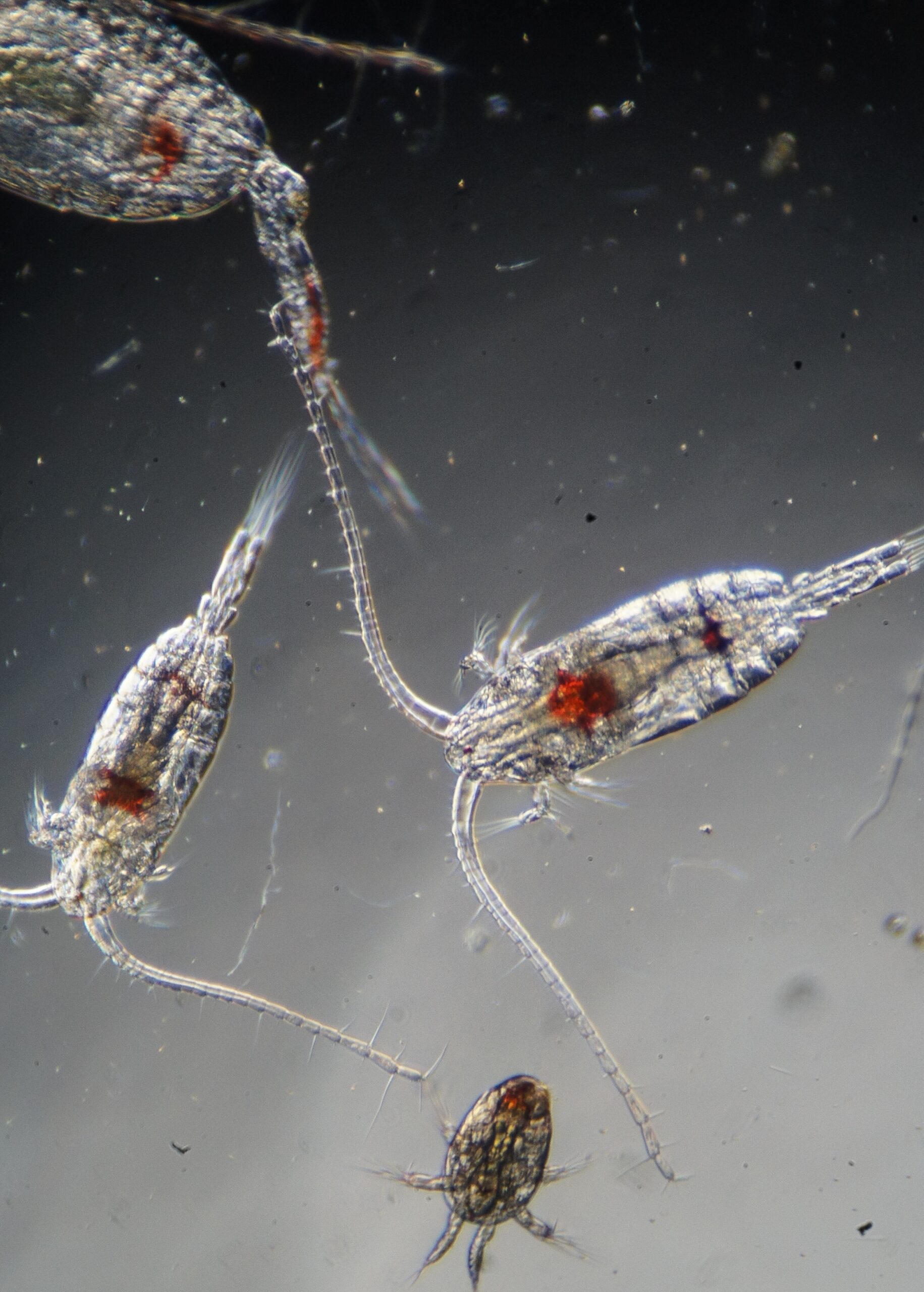
Copepods are among the most abundant animals in the sea, helping to drive the flow of energy through marine ecosystems. c. Marine Biological Association
An uncertain future
The abundances of zooplankton species supporting Northeast Atlantic food webs have declined over the past 60 years, and their future is uncertain given continuing climate change. Copepods are one of the most important groups of zooplankton in the ocean, forming a vital link between phytoplankton and higher predators such as fish, seabirds and marine mammals.
Although only a few millimetres long, copepods are among the most abundant animals in the sea and help drive the flow of energy through marine ecosystems. They convert the energy produced by microscopic marine plants into food that can be used by fish and other marine animals. As a result, what happens to copepods can have far-reaching consequences throughout the food web.
As highly sensitive indicators of environmental change, changes in their abundance and distribution can provide an early warning of wider shifts taking place across marine ecosystems.
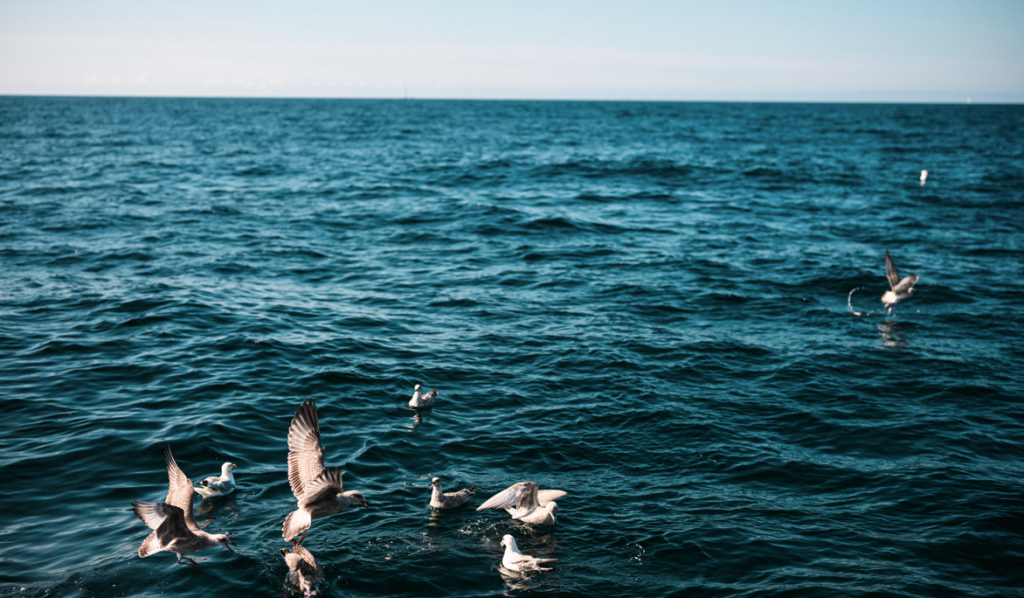
A substantial decline in zooplankton abundance could reduce the amount of energy available to support fish populations, seabirds and marine mammals. c. Marine Biological Assocation
Lead author Dr Emma Tyldesley, Research Associate at the University of Strathclyde Glasgow, said: “We already know that climate change is affecting zooplankton in this region. Scientists have observed declines in abundance, shifts in where species are found, and changes in their size and community composition. These changes could have important consequences for marine ecosystems.
“Our findings suggest that these trends are likely to continue and may be especially pronounced in European shelf seas. Copepods make up a large part of the diet of fish such as sandeel and herring, which in turn are an important food source for many larger predators.
“Although copepods are tiny, they help power the entire marine food web. Many commercially important fish species, including herring, mackerel and the juvenile stages of cod and other whitefish, depend directly or indirectly on copepods as a key food source during critical stages of their lives.
“What happens to plankton doesn’t stay with plankton. If copepod populations decline substantially, there may be less energy available to support the fish populations that sustain our marine ecosystems, fisheries and coastal communities. While the impacts on individual fish stocks will depend on many factors, these findings highlight how changes occurring at the very base of the food web can ultimately influence the abundance and health of species that may one day end up on our plates.”
Scenario predicts the effects of severe climate change
The study used a high-emissions climate scenario to explore how copepods might respond under strong climate change. Under the scenario, the researchers projected declines in copepod abundance of 58-72% by 2050 and 84-93% by 2100, depending on species size. Larger copepod species were projected to experience the greatest declines.
The study found stronger declines than those previously projected by lower-resolution global climate models, suggesting that Northwest European shelf seas may be particularly sensitive to climate-driven environmental change.
While emissions are not currently expected to rise to this level on this timeline, the scenario helps scientists to understand how marine ecosystems could be affected by ongoing climate change. The findings therefore illustrate the direction of travel for the marine ecosystem unless rapid action is taken to reduce carbon emissions, rather than an exact forecast.
Why does this matter?
Copepods sit at the foundation of ocean food webs. A substantial decline in their abundance could reduce the amount of energy available to support fish populations, seabirds and marine mammals. While marine ecosystems are complex and species respond differently to environmental change, scientists are increasingly concerned that continued declines in zooplankton could have knock-on effects for biodiversity, fisheries and the resilience of coastal ecosystems.
Understanding these changes is important not only for conservation but also for the future management of marine resources. Many of the fish species valued by commercial fisheries depend, directly or indirectly, on healthy plankton communities to support growth and survival.
How the CPR Survey contributed to the study
For almost a century, the CPR Survey has recorded changes in plankton communities across the North Atlantic, creating a unique evidence base for understanding how marine ecosystems respond to environmental change. By training this new high-resolution machine-learning model on CPR observations and historical ocean conditions, the researchers were able to explore how key copepod populations may respond to future climate change with unprecedented regional detail.
Director for the CPR Survey, David Johns, said: “The CPR Survey has already documented significant shifts in plankton communities in response to a warming ocean. This study suggests that under strong climate change scenarios, declines in copepod populations could become even more pronounced, particularly in Northwest European shelf seas.
“Because copepods play a critical role in transferring energy from plankton to fish, seabirds and marine mammals, sustained declines could have consequences throughout marine food webs. Understanding these changes is essential if we are to anticipate how future marine ecosystems, including fish populations important to both wildlife and people, may respond to climate change.”
The zooplankton projections will be used in wider ecosystem studies as part of the NERC-funded ECOWind Ecowings project. This collaboration involves the University of Strathclyde, UK Centre for Ecology & Hydrology, National Oceanography Centre, Marine Biological Association, Biomathematics and Statistics Scotland, and Heriot-Watt University.
The study’s findings will help researchers investigate how future changes in zooplankton populations could affect species higher up the food web, including seabirds such as kittiwakes that depend on fish like sandeels for food. They will also improve understanding of how climate-driven changes at the base of the food web may influence the availability of prey for fish species that support commercial fisheries.
The projections will also contribute to the Missing Salmon Alliance and Atlantic Salmon Trust’s Likely Suspects Framework project, where they will be used as an indicator of marine feeding conditions for wild Atlantic salmon.
For almost a century, the CPR Survey has provided an unparalleled record of life in our oceans. As the world’s longest-running and most extensive marine biological monitoring programme, it delivers the long-term evidence needed to understand how plankton are responding to environmental change, improve future projections, and support effective marine management and adaptation.