Scientists have uncovered new evidence that climate change is driving toxin-producing harmful algal blooms (HABs) in the Pacific Arctic, raising concerns for marine wildlife, fisheries and the coastal communities that depend on the region’s resources.
The Marine Biological Association (MBA) led research focuses on the Pacific Arctic region, which is warming faster than almost any other region on Earth. As sea ice decreases and warmer Pacific water moves northward, HABs are likely to expand into more northern polar regions.
The Bering sea supports globally important fisheries, large populations of marine mammals and seabirds, and coastal Indigenous communities reliant on gathering and hunting food. However, offshore monitoring in this region has been sparse due to difficult-to-access waters.
Researchers found a solution to studying these remote, hard-to-reach regions by using the Continuous Plankton Recorder (CPR) Survey, the longest-running and largest marine biological times series in the world. Run by the Marine Biological Association (MBA), the CPR Survey is particularly valuable in hard-to-access marine regions because it provides cost-effective, reliable, and geographically extensive plankton monitoring using commercial shipping routes.
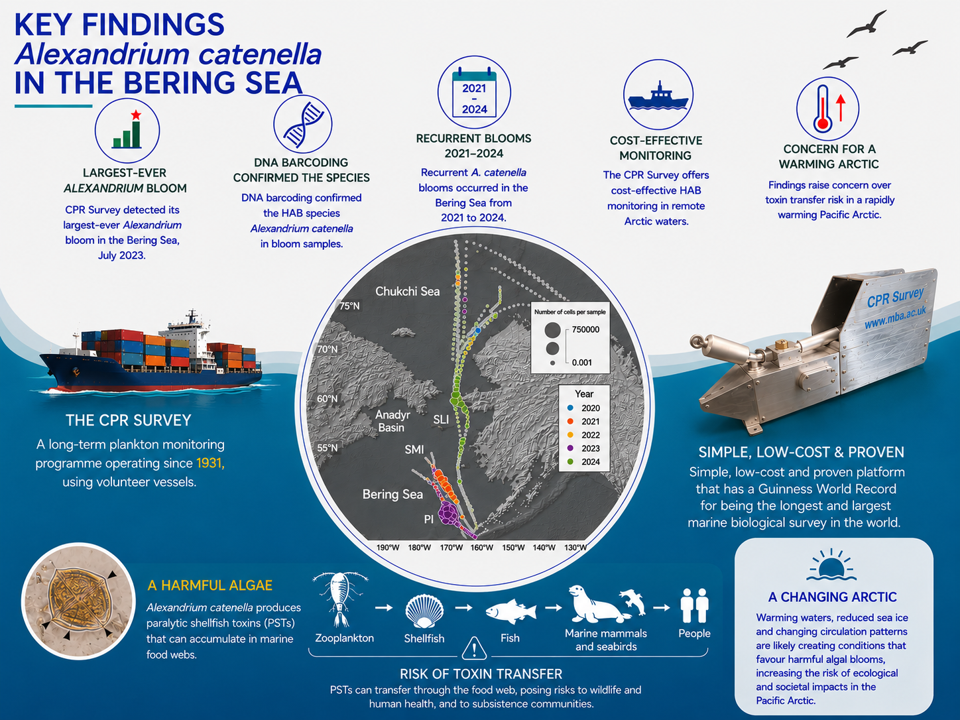
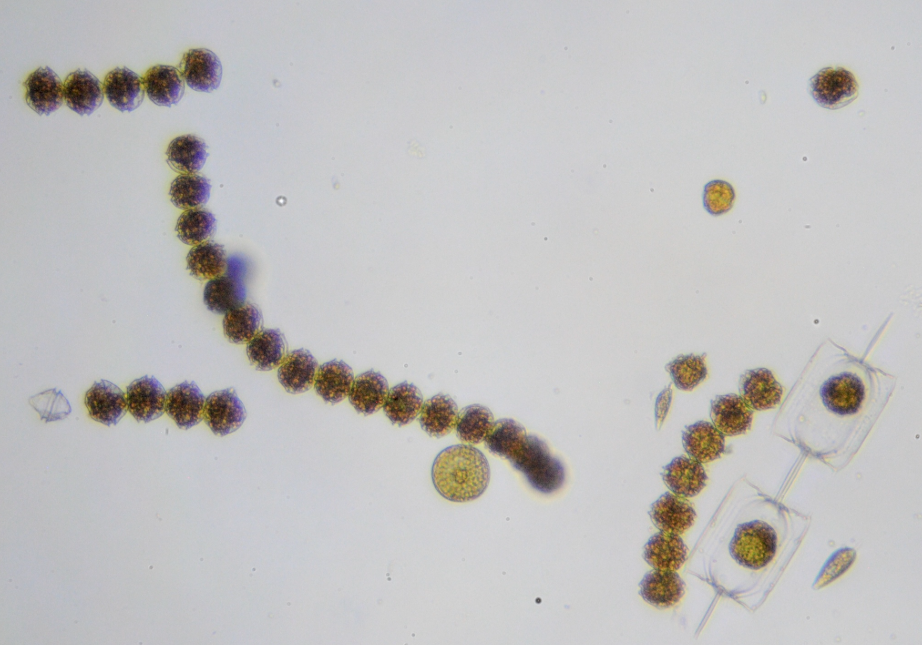
The paper, Mega-blooms of the harmful alga Alexandrium catenella in the Bering Sea recorded by the Continuous Plankton Recorder Survey, published in Harmful Algae, details four bloom events in the Bering Sea, including the largest Alexandrium bloom recorded in the 60-year history of the Survey globally. HABs cause substantial harm to marine ecosystems, fisheries, aquaculture, public health and economies worldwide.
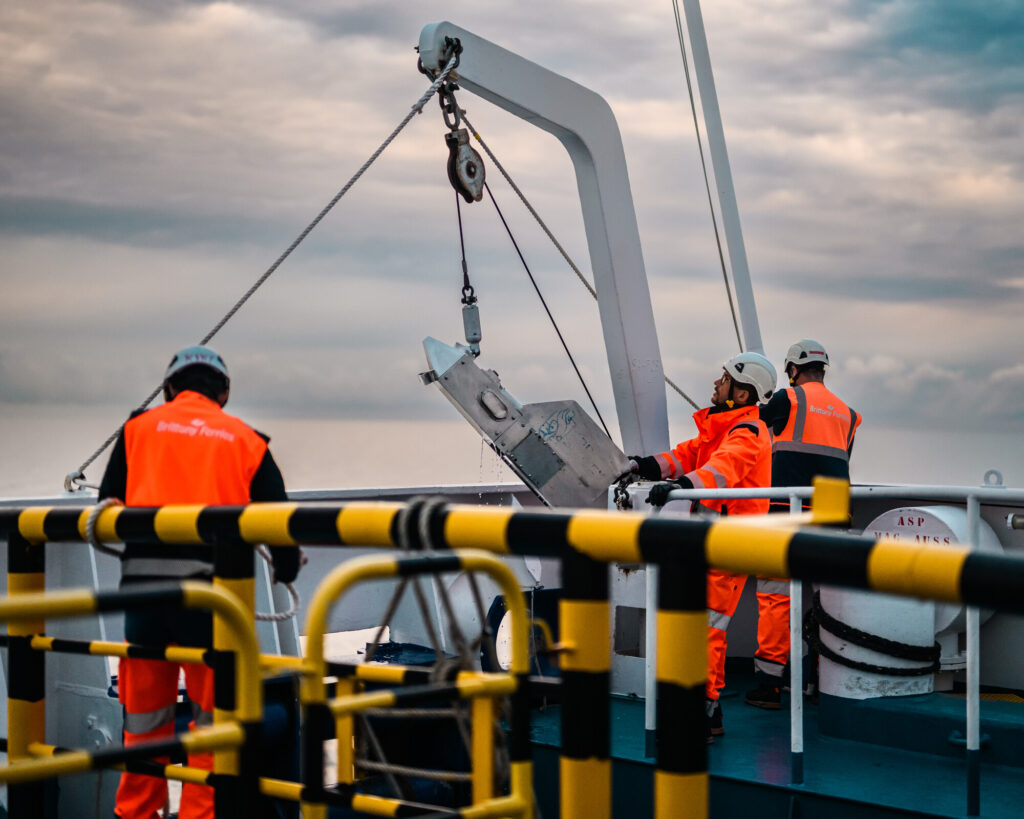
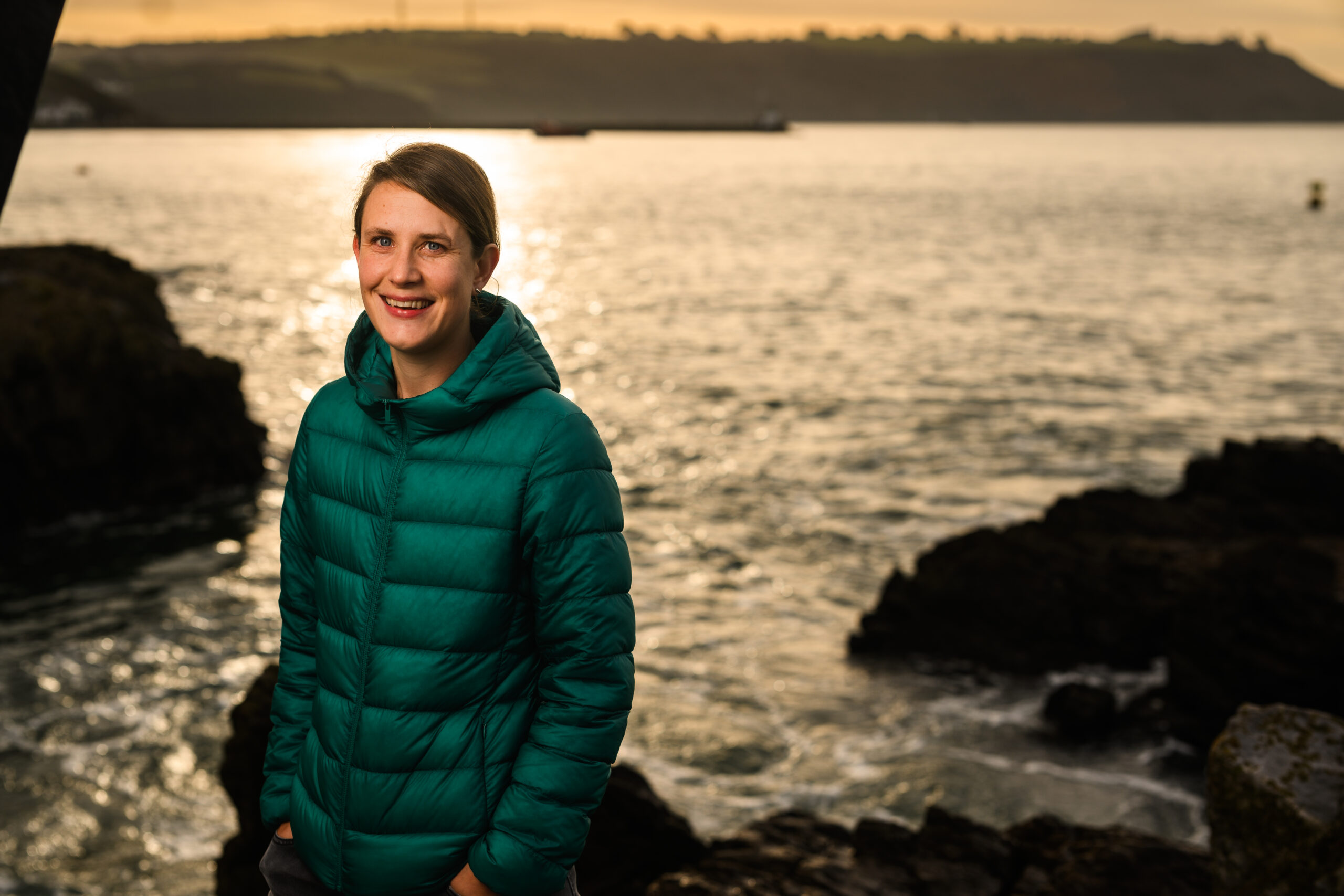
Lead author, MBA Senior research Fellow Dr Clare Ostle
Lead author, MBA Senior Research Fellow Dr Clare Ostle, said: “We started to pick up really high numbers of an Alexandrium species, which is a small dinoflagellate. In CPR samples, we picked up numbers of Alexandrium that we had never seen before in that amount. This is across the whole North Atlantic, North Pacific – the Global Alliance of CPR Survey partners haven’t seen that kind of abundance before.”
Alexandrium catenella can disrupt food webs through the transfer of saxitoxins, which can cause neurological symptoms, reproductive failure, and mortality in fish, seabirds and marine mammals. “Some of these species can become toxic,” explains Dr Ostle. “There have been reports of bowhead whales and northern fur seals dying in the area from these high concentrations of the toxin.”
These blooms can also cause Paralytic Shellfish Poisoning (PSP) in humans, a serious illness that occurs when people consume shellfish contaminated with harmful toxins produced by this species of dinoflagellate.
Overall, the findings provide further evidence that ocean warming is increasing the risk of HABs, with potential impacts on marine ecosystems and food security in the Pacific Arctic.
“It’s showing some of the most extreme warming in the last few years. With bottom water temperatures warming up, it’s likely that they are creating some of these mega blooms,” adds Dr Ostle. “It is likely and expected that these blooms will continue and are likely to get even more intense in their size.”
This latest study provides further evidence that warming oceans are creating conditions that favour the expansion of harmful algal blooms. “The Global Alliance of Continuous Plankton Recorder Surveys enables these findings to be compared with observations from other ocean regions, placing this regional study in a global context,” concludes Dr Ostle. “Continued long-term monitoring is therefore essential to understand these changes and to help manage the risks they pose to marine wildlife, fisheries, and human health.”