PhD Opportunities
Be inspired by leaders in their fields with our range of PhD opportunities here at the Marine Biological Association (MBA).
Take a look at some of the exciting opportunities hosted by the MBA and through our Marine Research Plymouth (MRP) partners, the University of Plymouth and Plymouth Marine Laboratory.
AI-Driven Computer Vision for Automated Monitoring of Marine Biodiversity and Climate Impacts
This project will use the rocky intertidal as a testbed to develop novel AI- and deep learning–based computer vision tools that automatically identify and count barnacles, macroalgae, and other invertebrates from large image datasets. The project will be hosted at Loughborough University.
Supervisors
- Baihua Li (Loughborough University)
- Nova Mieszkowska (Marine Biological Association)
- Jonathan Millett (Loughborough University)
Training programme: CENTA DTP
Application deadline: 7 January 2026
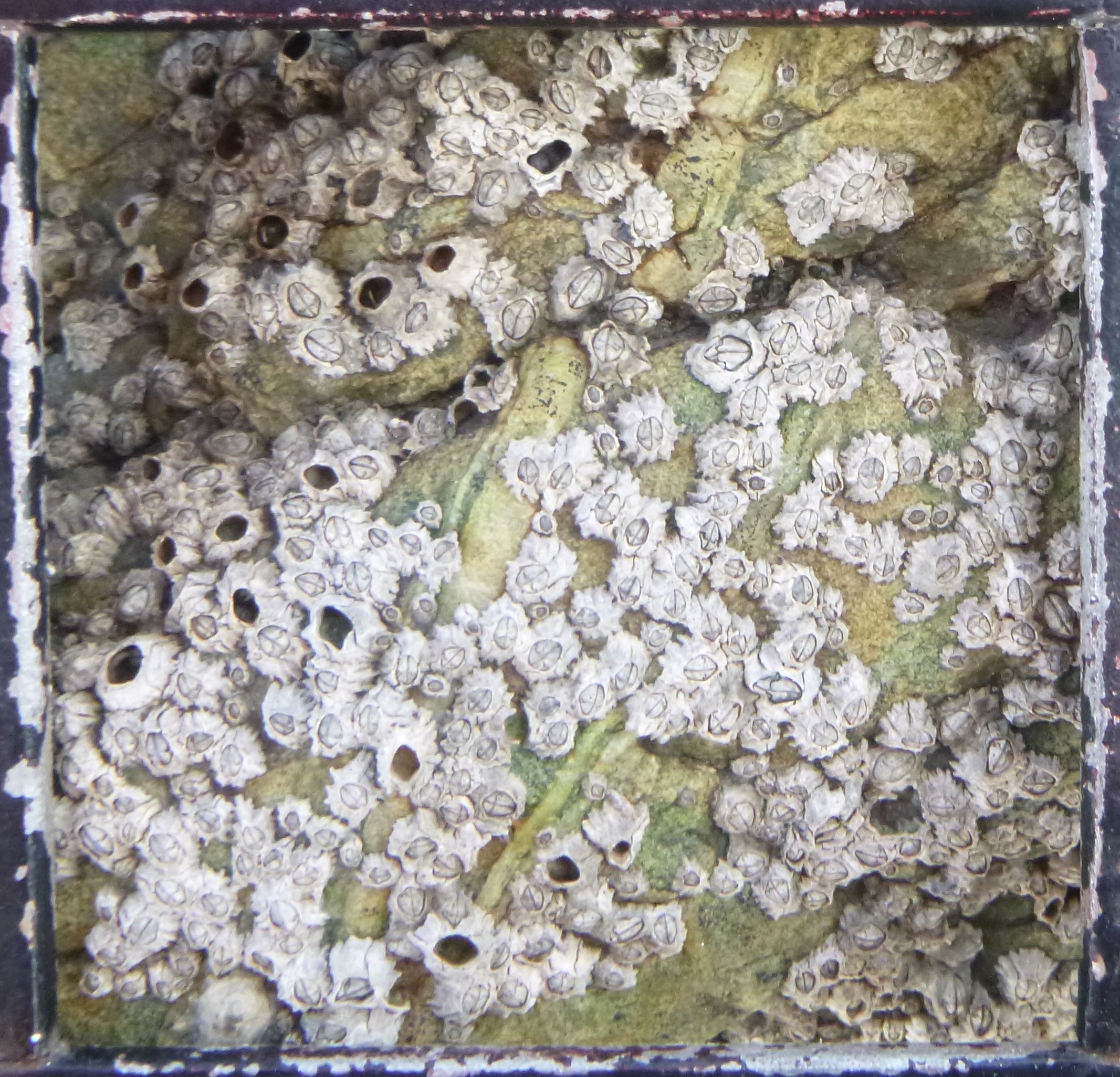
Impacts of UK heatwaves on coastal biodiversity: from genes to ecosystems
This project will apply a multi-level approach (molecular, physiology and ecology) to investigate how coastal temperate marine invertebrate and macroalgal species respond to extreme heat events, both marine and atmospheric, across multiple biological scales. The project will be based within collaborative, multi-disciplinary research groups at the University of Plymouth and the Marine Biological Association, Plymouth.
Supervisors
- Manuela Truebano Garcia (University of Plymouth)
- Dan Smale (Marine Biological Association)
- Michael Collins (University of Plymouth)
Training programme: ARIES DLA
Application deadline: 7 January 2026
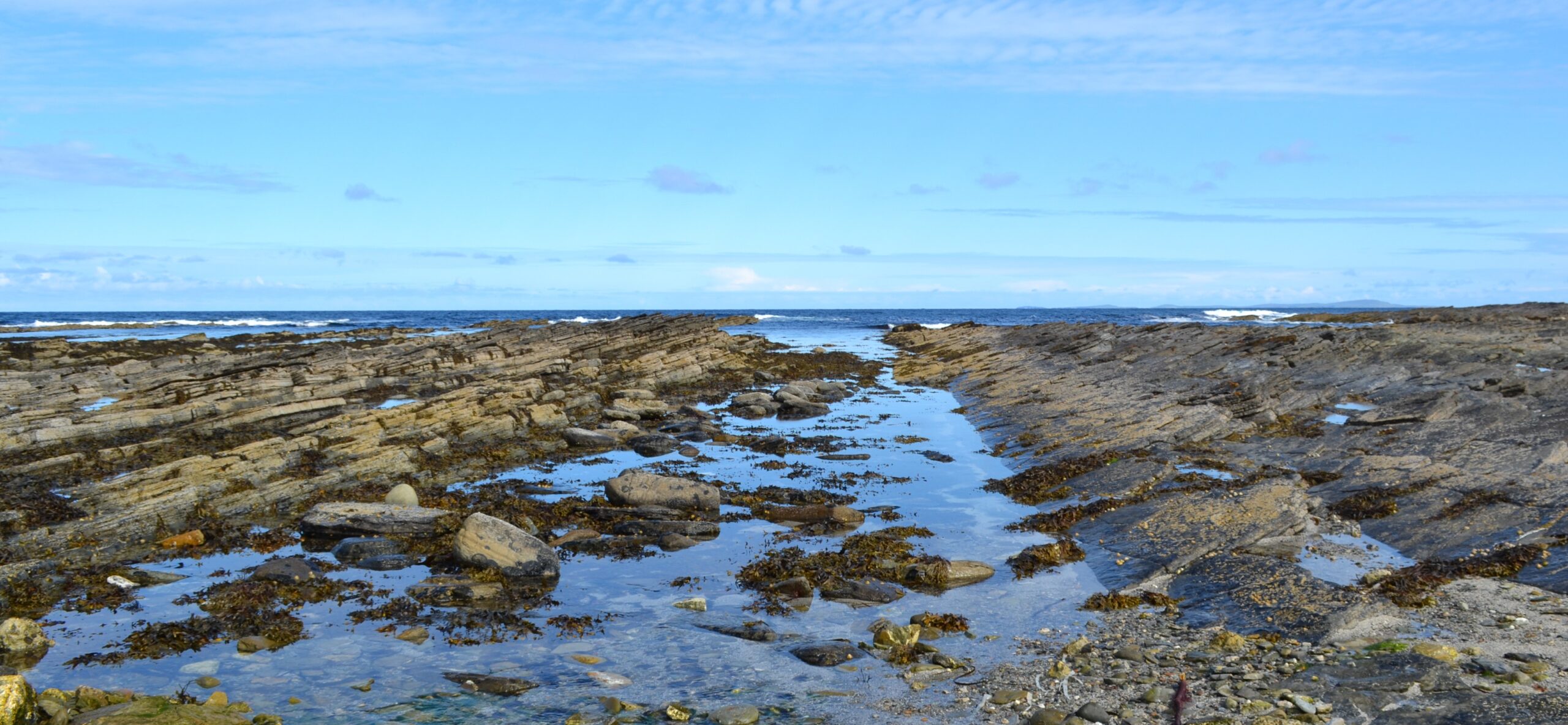
Combining long-term ecological monitoring with AI-analysis and field experiments to model biodiversity responses to climate change
This project will examine spatial concordance for barnacles using manipulative field experiments, targeted surveys, and AI assisted taxonomy. This project will be located at the Marine Biological Association, Plymouth.
Supervisors
- Nova Mieszkowska (MBA)
- Phil Fenberg (University of Southampton)
- Stephen J Hawkins (MBA/University of Southampton)
- Mike Burrows (Scottish Association for Marine Science)
Training programme: IGNITE DLA
Application deadline: 8 January 2026
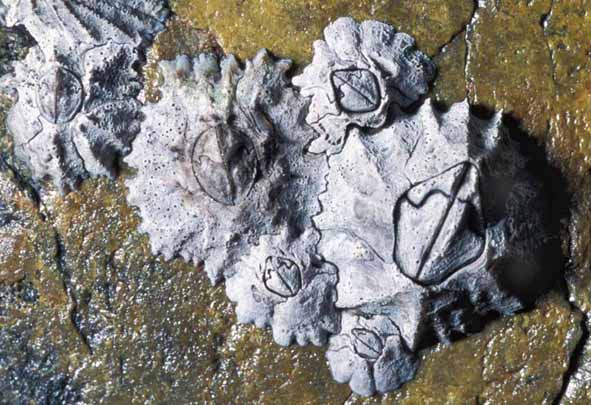
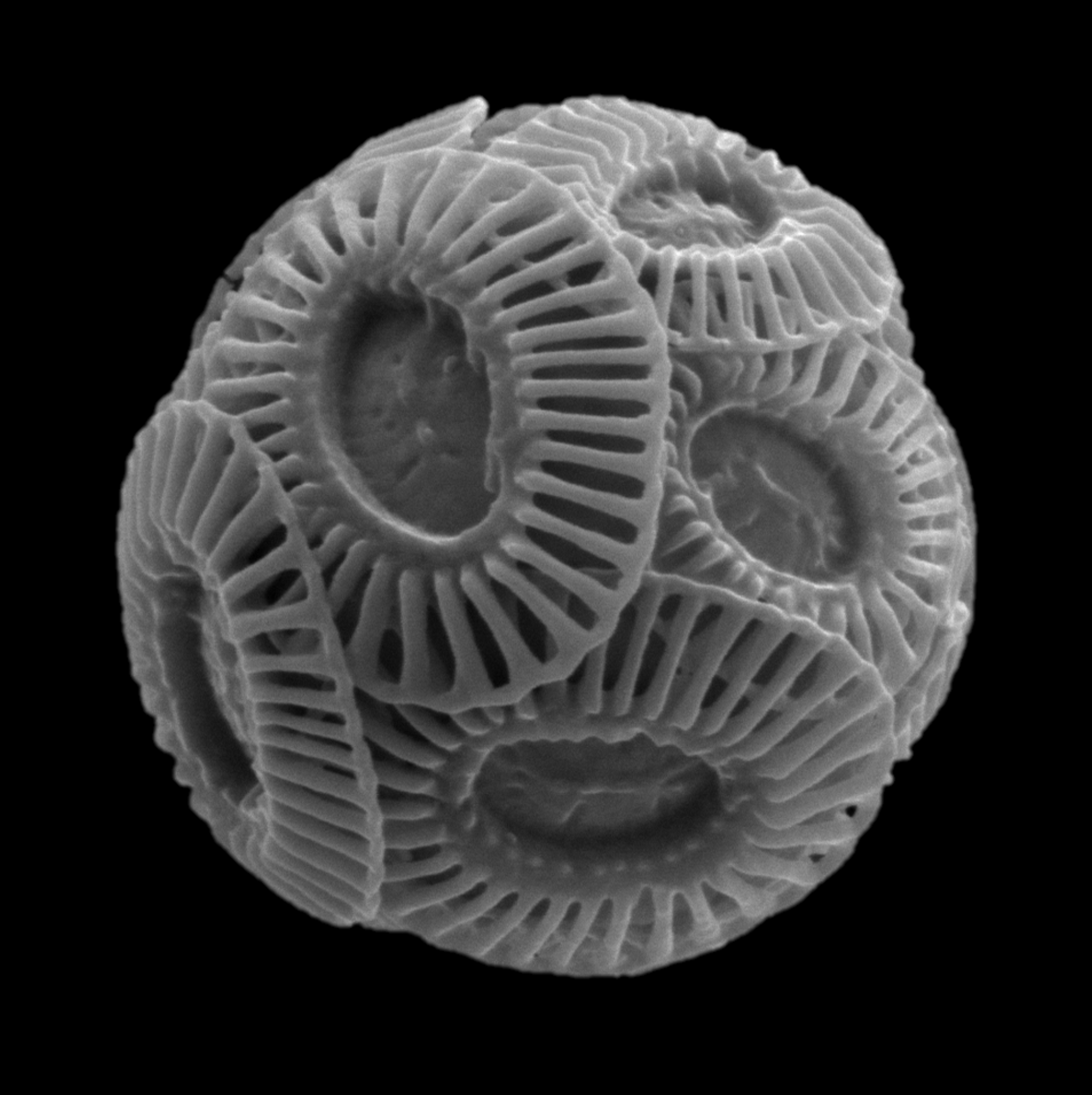
Comparing biomineralisation mechanisms in marine calcifying organisms to understand their resilience to global change
This project will use cutting edge approaches to compare mechanisms of calcification in two major groups, foraminifera and coccolithophores, to identify mechanistic differences that underlie their sensitivities to future environmental change. This project will be located at the Marine Biological Association, Plymouth.
Supervisors
- Glen Wheeler (MBA)
- Gavin Foster (University of Southampton)
- David Evans (University of Southampton)
Training programme: IGNITE DLA
Application deadline: 8 January 2026
Examining impacts of marine heatwaves on key indicator species of ocean warming
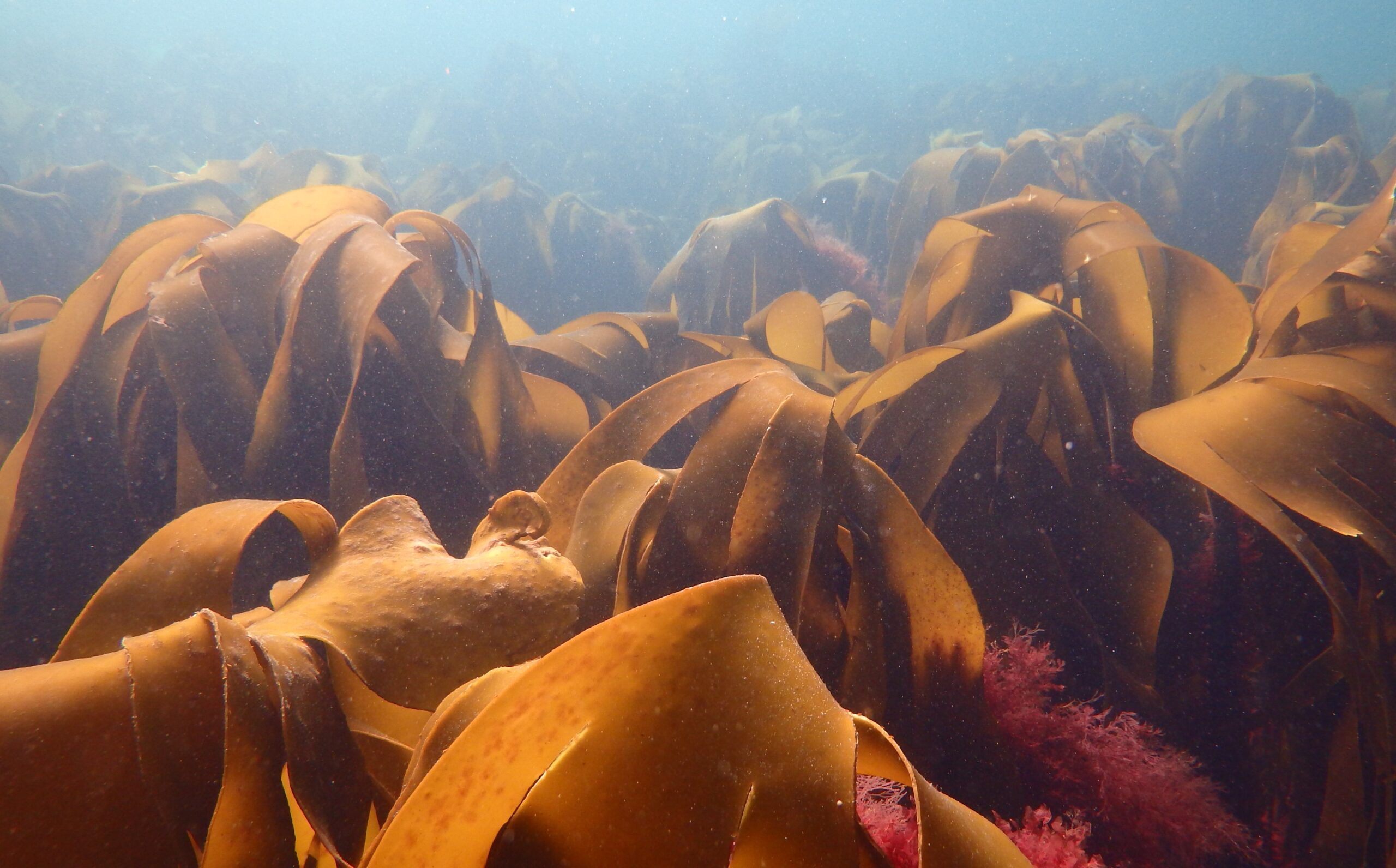
This project represents an exciting opportunity to lead novel experimental and observational research to better understand the responses of marine organisms to an increasingly extreme ocean climate. This project will be located at the Marine Biological Association, Plymouth.
Supervisors
- Dan Smale (MBA)
- Cathy Lucas (University of Southampton)
- Nathan King (MBA)
Training programme: IGNITE DLA
Application deadline: 8 January 2026
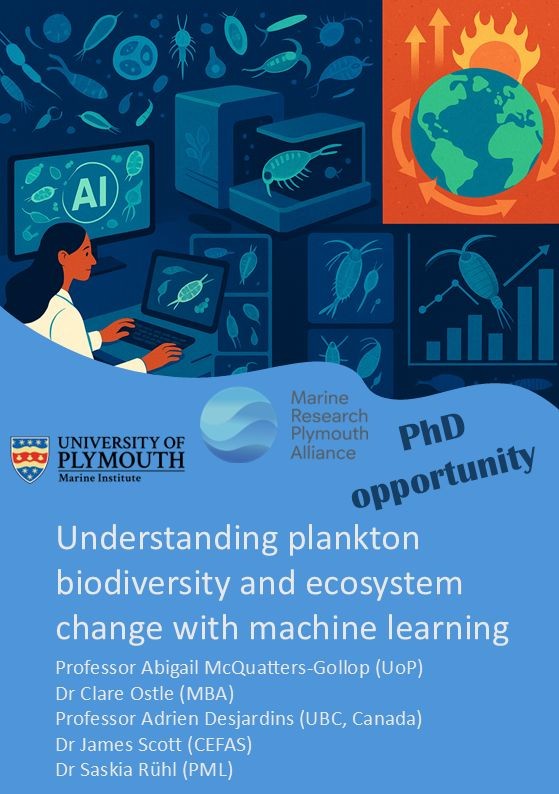
Understanding plankton biodiversity and ecosystem change with machine learning
Applications are invited for three 3.5 year PhD studentships with the Marine Institute at the University of Plymouth. This project is also eligible for a MRP PhD studentship, which has different funding arrangements. If you wish to be considered for both, please submit two separate applications. Shortlisted candidates will only be interviewed for the studentship they applied for.
Supervisors
- Abigail McQuatters-Gollop (University of Plymouth)
- Clare Ostle (MBA)
- Adrien Desjardins (University of British Columbia, Canada)
- James Scott (CEFAS)
- Saskia Rühl (Plymouth Marine Laboratory)
Apply via programme funder:
- SERVO: Understanding plankton biodiversity and ecosystem change by applying machine learning – A CASE studentship (SERVO) – University of Plymouth
- Marine Research Plymouth: Understanding plankton biodiversity and ecosystem change by applying machine learning – A CASE studentship (MRP) – University of Plymouth
Application deadline: Midday (11.59am GMT), 2 February 2026