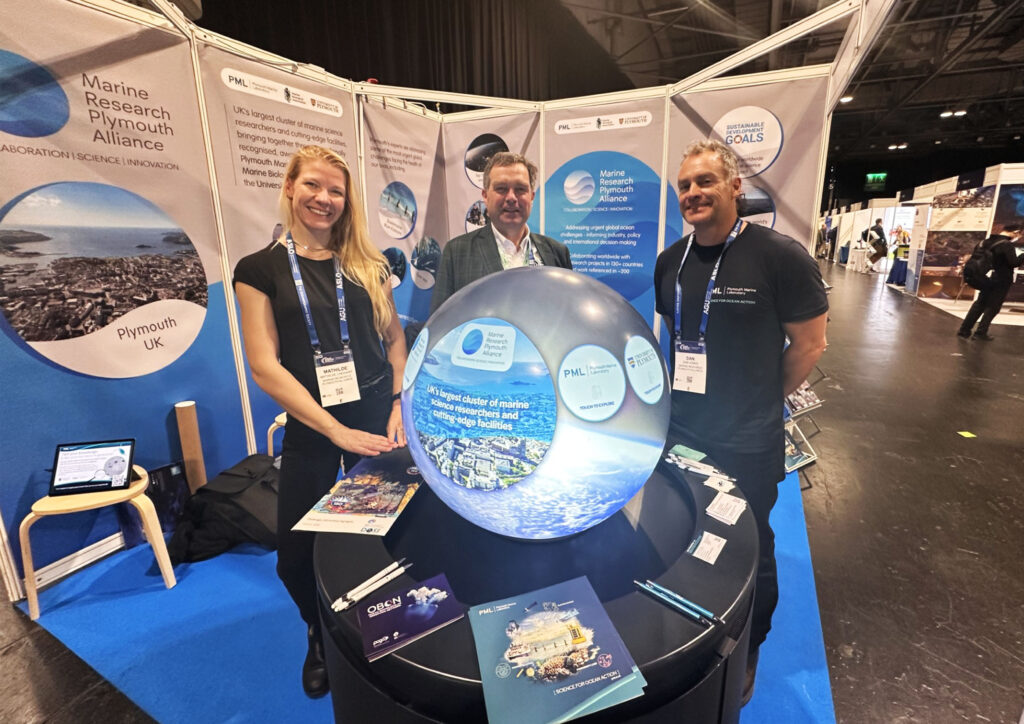
From the left: Dr Mathilde Lindhart (University of Plymouth), Professor Willie Wilson (MBA) and Dan Jones (PML)
Marine life, climate change, and ocean health took centre stage at this year’s Ocean Sciences Meeting (OSM26). Held in Glasgow from 22–27 February, the conference brought together thousands of researchers to share new insights and breakthroughs in understanding our changing ocean.
This year, the MBA exhibited as part of the Marine Research Plymouth Alliance – a partnership between the Marine Biological Association, Plymouth Marine Laboratory (PML), and the University of Plymouth. The strong presence of the Alliance at OSM26 underlined the value of collaborative research and the shared commitment to advancing ocean science.
Among the leading voices at OSM26 were scientists from the Marine Biological Association (MBA), whose long-term datasets, innovative research and leadership in global observing networks featured prominently throughout the week.
A new era for biological ocean observing
A major theme at OSM26 was the rapid advancement of biological ocean observations – the tools and technologies that help scientists measure and understand marine life at scales once thought impossible. Two key international initiatives showcased this progress, Bio‑GO‑SHIP: Building a Global Biological Baseline and OBON: Powering Biomolecular Insights.
Bio‑GO‑SHIP is working to add routine biological sampling to the long‑established GO‑SHIP survey network, which already collects physical and chemical measurements across the global ocean. At its well‑attended Town Hall session, Bio‑GO‑SHIP outlined plans for a coordinated, long‑term programme to collect consistent biological data worldwide, emphasising the need for shared methods, international cooperation and sustained governance. This effort is helping to build the foundations for global biological time‑series observations, closely aligning with the MBA’s strengths in plankton ecology and long‑term monitoring.
Meanwhile, the Ocean Biomolecular Observing Network (OBON), a programme endorsed by the UN Ocean Decade, highlighted major advances in biomolecular tools, environmental DNA (eDNA) and large‑scale biodiversity monitoring. OBON’s work is accelerating the delivery of real‑time, global biomolecular data – transforming how marine life is detected and tracked. For the MBA, already a leader in molecular ecology and long-running eDNA time‑series research, OBON represents a powerful and collaborative international network.
Key sessions led by MBA scientists
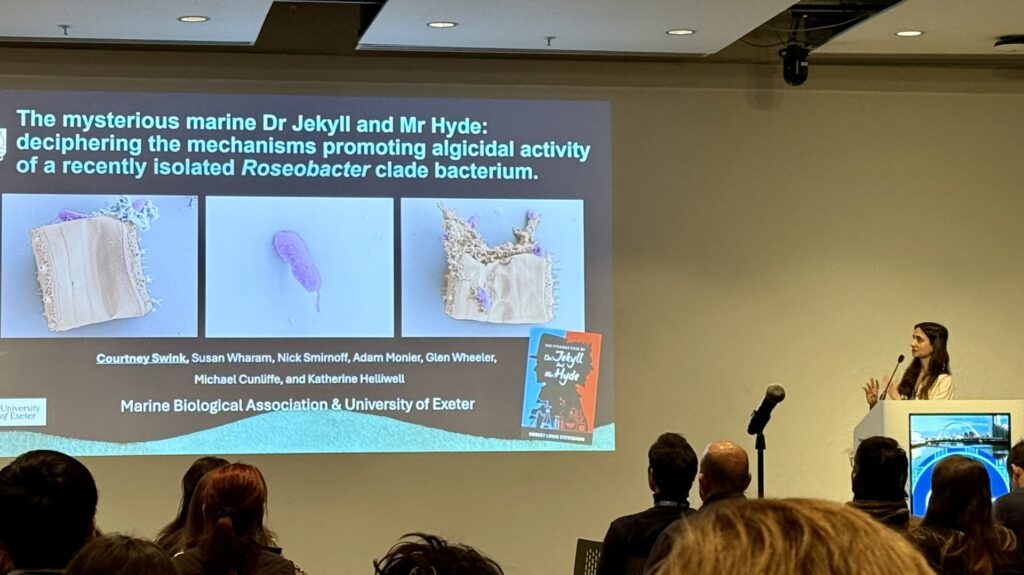
Dr Courtney Swink presenting MBA research.
Our researchers presented new findings and shared insights from long‑running observation programmes.
- Dr Clare Ostle chaired sessions on marine plankton community variability and presented new work on detecting harmful algal species using the CPR survey.
- Dr Katie Smith chaired the Ecological and Societal Impacts of Marine Heatwaves series and led discussions on how extreme temperature events reshape ecosystems.
- Dr Courtney Swink presented new insights into algicidal interactions within marine bacteria.
- Dr Ellen Harrison showcased cutting‑edge proteomics research on nutrient acquisition in marine diatoms.
- Caitlin Kumiko Dye presented findings from 20 years of eDNA observations in the Western English Channel, revealing how molecular methods can help track long-term biodiversity change.
- Additional contributions from Diego F. Morales-Torres and Dr Loïck Kléparski addressed climate-driven change in both plankton communities and top marine predators.
These sessions highlight the diverse strengths of MBA science, from long‑term ecological datasets to innovative molecular tools and climate‑change ecology.
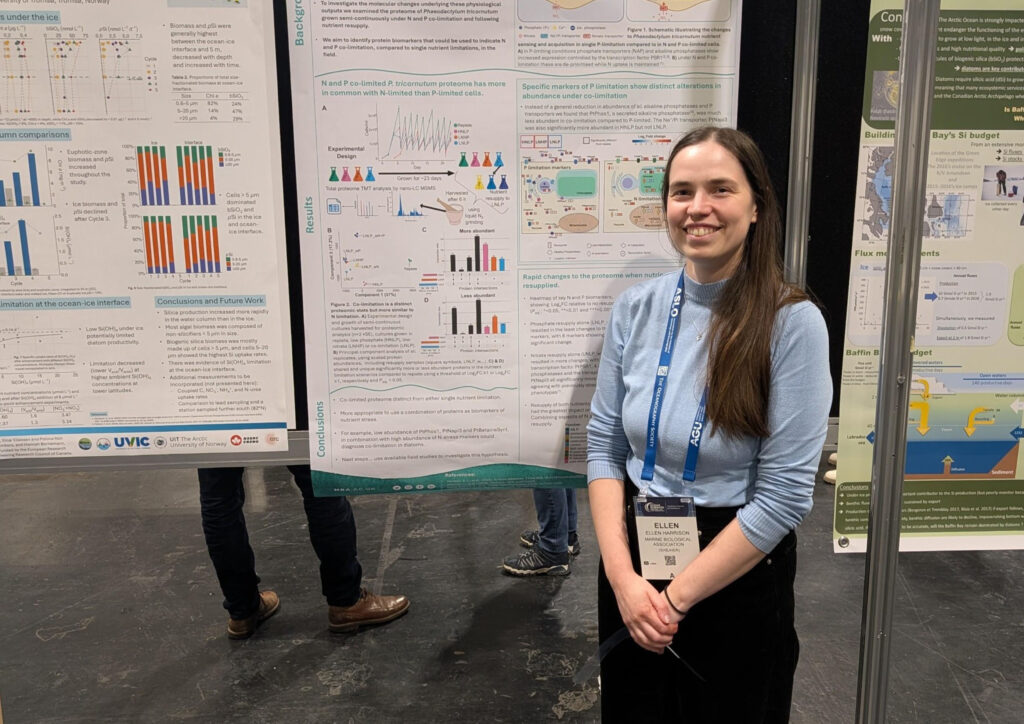
Dr Ellen Harrison presenting her poster on co-nutrient uptake in diatoms.
Why the MBA’s science matters
As climate pressures intensify, the ability to detect change early, from shifts in plankton communities to emerging harmful algal blooms, is becoming increasingly critical for fisheries, conservation and coastal communities.
The growing global focus on biological ocean observations reflects our mission; to better understand marine life and support evidence‑based stewardship of the ocean. Developments at OSM26 showed how the MBA’s research priorities are closely aligned with the global marine science community, including:
- Stronger international coordination on how biological data is collected.
- Standardised methods, making it easier to compare data from different regions.
- Rapid growth in molecular and eDNA monitoring, a field where the MBA already contributes world‑leading datasets.
- Renewed recognition of long‑term time‑series data, a core strength of the MBA’s Continuous Plankton Recorder (CPR) Survey and Western English Channel Observatory.
Together, these global efforts are helping to build the tools needed to detect biodiversity change, track climate impacts and support sustainable ocean management.
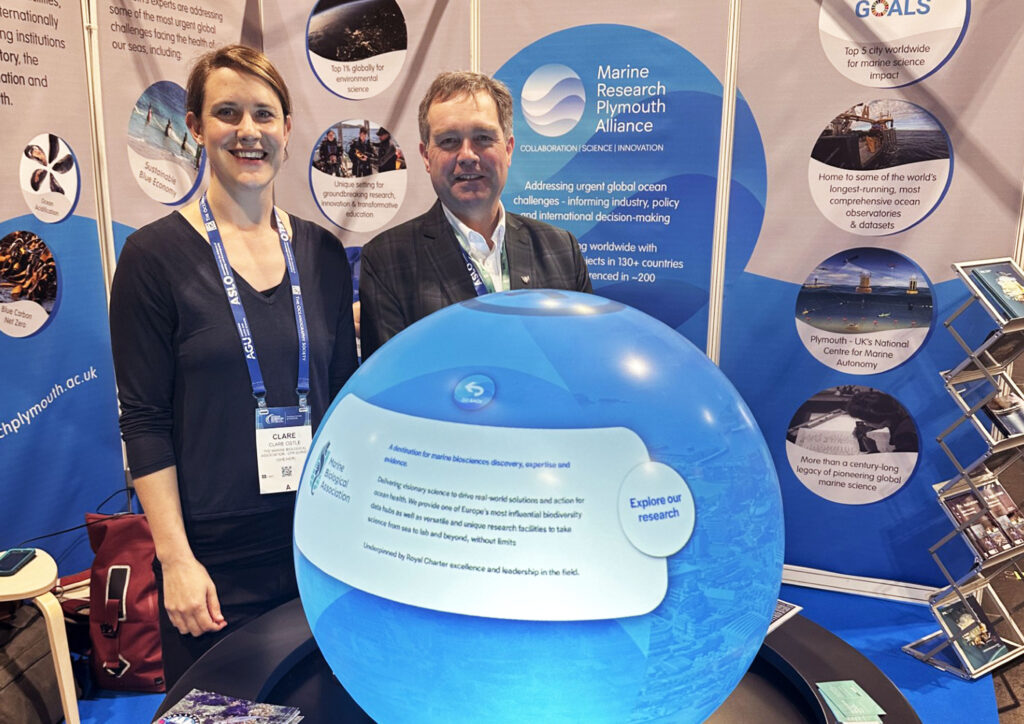
Dr Clare Ostle and Professor Willie Wilson FMBA.
Looking ahead
As biological ocean observing advances, the MBA is ready to help shape the next generation of global research. Our long-term monitoring, molecular ecology expertise, and collaborative networks will continue to drive innovative solutions for understanding and protecting the ocean.
Thank you to all the staff, collaborators and partners who contributed to this year’s conference.
