Redirecting shipping traffic to avoid collisions with whale sharks has very little impact on fuel use, according to new research led by the University of Southampton co-authored by scientists from the Marine Biological Association.
Experts found that rerouting container ships and oil tankers around whale shark hotspots used at most just one per cent more fuel on longer voyages.
For shorter crossings, it was more fuel efficient to restrict vessels’ speed when passing through the critically endangered ocean giants’ gathering sites.
By demonstrating how biodiversity data can be incorporated into the navigation software shipping companies already use, the researchers hope to show that global shipping can support conservation efforts without significantly increasing costs.
“Our research shows how incorporating species-specific habitat data into voyage planning could mitigate the risk of ship strikes with negligible disruption to global trade,” says Dr Ryan Reisinger, Associate Professor in Marine Biology and Ecology from the University of Southampton, who led the research.
“We demonstrated this with whale sharks, but it could be applied to other large sea creatures at risk of ship strikes, such as whales and dolphins.”
The research, Optimizing voyages for biodiversity: rerouting vessels around ocean giants can have minimal impact on shipping is published today in Royal Society Open Science.
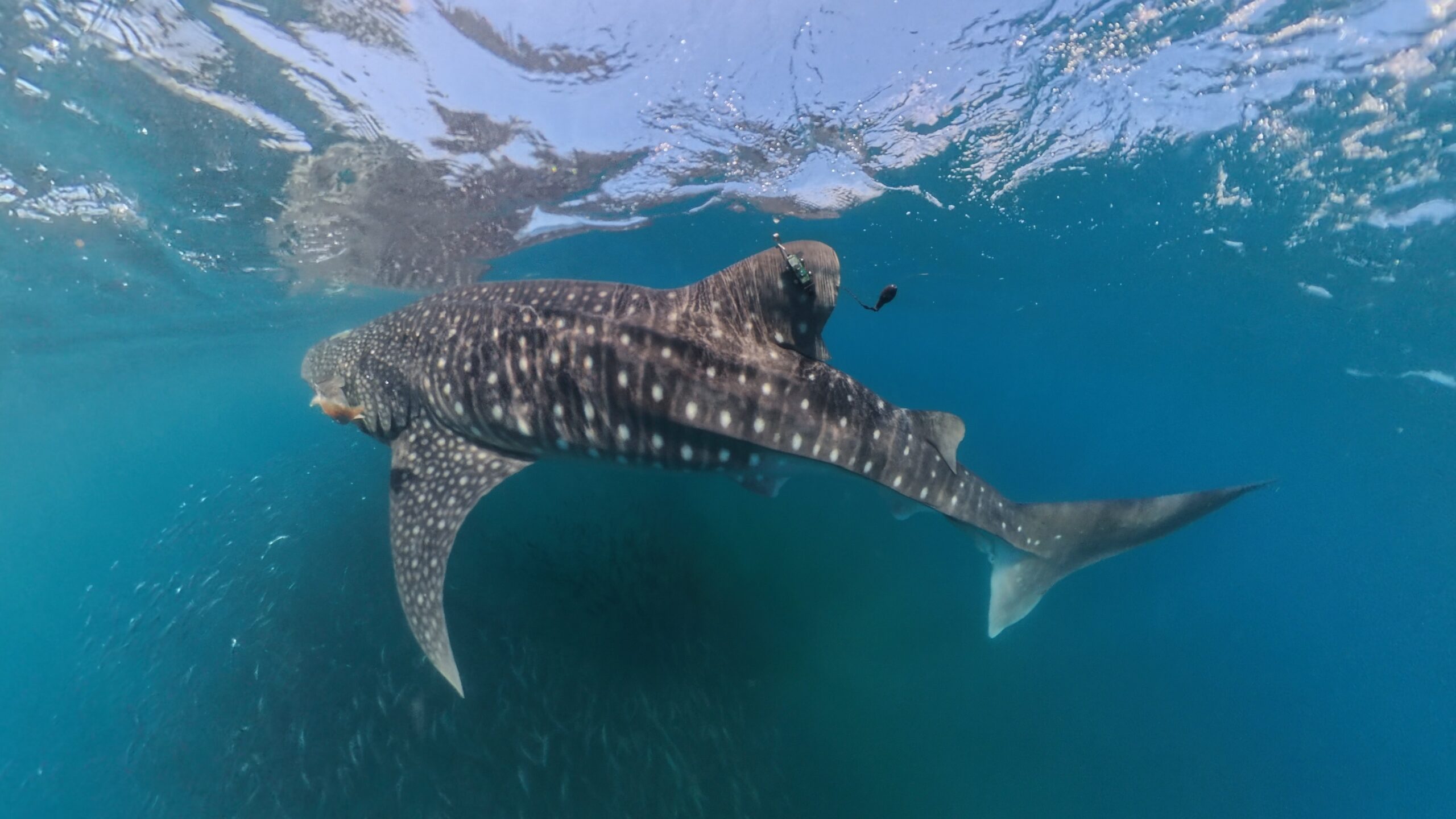
Ship strikes have been recorded for at least 75 marine species, but the true scale of the problem is unclear as collisions can go undetected or unreported. That is especially true for creatures which sink when killed, like whale sharks. They spend almost half their time in surface waters, and their population has more than halved in 75 years.
“We know this issue is likely to get worse if we don’t act now due to climate change potentially driving whale sharks into new habitats crossed by busy shipping lanes and shipping trade expected to increase,” says co-author on the paper, MBA Postdoctoral Research Scientist Dr Freya Womersley.
Co-author Professor David Sims, MBA Senior Research Fellow and Professor of Marine Ecology at the University of Southampton, added: “We know that if mitigation measures impose significant economic costs, it’s unlikely they will be adopted voluntarily by the industry and, in addition, may slow progress in developing and implementing global policy to protect marine megafauna at risk from ship collisions.”
The team incorporated maps of known whale shark aggregation sites into the state-of-the-art voyage optimisation software widely used in commercial shipping.
They then simulated eight crossings originating in the Persian Gulf and Gulf of Mexico, which had been identified as amongst the most dangerous crossings for whale sharks, to see the impact of rerouting or slowing ships on fuel use.
They found rerouting to avoid whale shark aggregation sites entirely used at most one percent extra fuel for journeys of more than six days. Rerouted voyages lasting more than 12 days used even less (a 0.5% increase).
For shorter voyages, where changes in distance have a larger proportion effect, a speed reduction was the more fuel-efficient approach, again limiting additional fuel costs to less than one percent for slower vessels.
Researchers say the concept could be scaled up with improved data, dynamic forecasting, regulatory and incentive frameworks, and further integration with existing technology.
Dr Reisinger concluded: “By embedding biodiversity into voyage optimisation, the maritime sector can contribute meaningfully to global efforts to reduce ship strikes, safeguard at-risk species and maintain the resilience of ocean ecosystems, all while sustaining the efficient movement of goods on which the global economy depends.”
Read the full paper here in Royal Society Open Science: Optimizing voyages for biodiversity: rerouting vessels around ocean giants can have minimal impact on shipping.