MBA scientists Dr Glen Wheeler and Professor Colin Brownlee have contributed to a special issue of Botanica Marina on the ‘Physiology of marine photoautotrophs’ that celebrates the life and work of Prof John Raven FRS.
John was a leader in the field of evolution and physiology of plants and algae and had close links to the Marine Biological Association throughout his career. John served on MBA Council for over 20 years, helping to guide the MBA’s development as a leading institute for marine biology research.
Much of John’s long and extensive career studied the physiology of marine phytoplankton, the tiny algae that support all other forms of life in our oceans. He published over 600 research papers and lead the landmark Royal Society report examining the potential impacts of ocean acidification on marine ecosystems.
John’s research pioneered our understanding of algal photosynthesis, helping us understand the global carbon cycle and paving the way for much of the current research in this area. John’s breadth and depth of knowledge was truly extraordinary, and his work had a profound influence across multiple research areas, including our own, often asking (and answering) big and bold questions that were beyond the scope of other researchers.
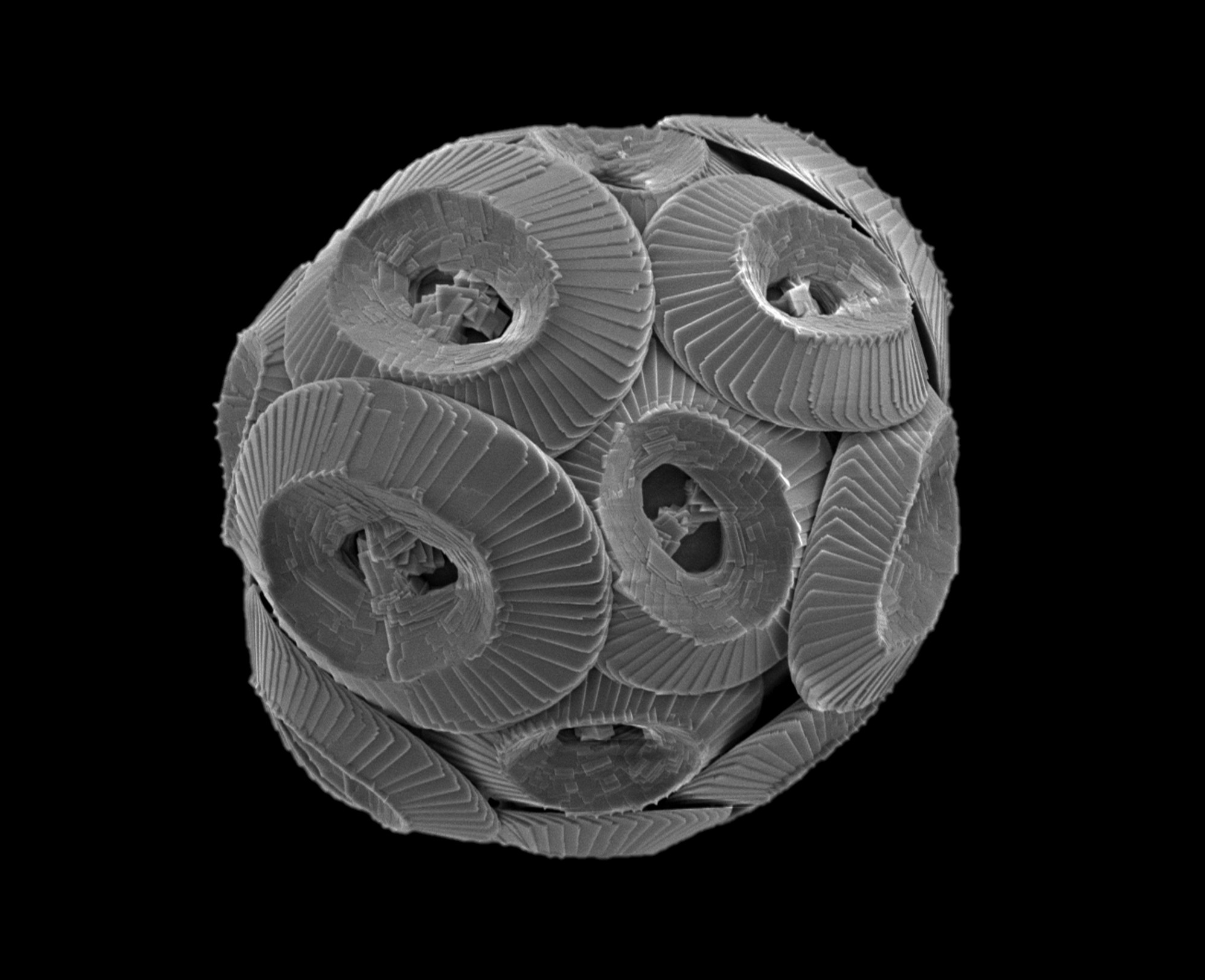
The calcifying coccolithophores were a subject of great fascination to John. These tiny algae dominate calcium carbonate production in our oceans and play a critical role in the global carbon cycle through the formation of vast carbonate sediments that help to stabilise atmospheric carbon dioxide.
John had the vision to realise that these algae must have unique cellular mechanisms that enable them to calcify at such a prodigious rate. These mechanisms are the focus of the review by Colin Brownlee and Glen Wheeler entitled ‘Pathways to calcification in coccolithophores’.
The article examines how these algae are able to take up so much carbon and calcium and convert it into their wonderfully intricate calcium carbonate structures, and how this process may be impacted by future environmental change. It’s an excellent example of John’s extraordinary foresight, being able to identify these key research questions long before anyone else realised that the question existed. The work collected in the Botanica Marina special issue demonstrates that his pioneering ideas continue to have a profound impact in many diverse research areas today.
Brownlee, Colin and Wheeler, Glen. “Pathways to calcification in coccolithophores” Botanica Marina, 2026. https://doi.org/10.1515/bot-2026-0074