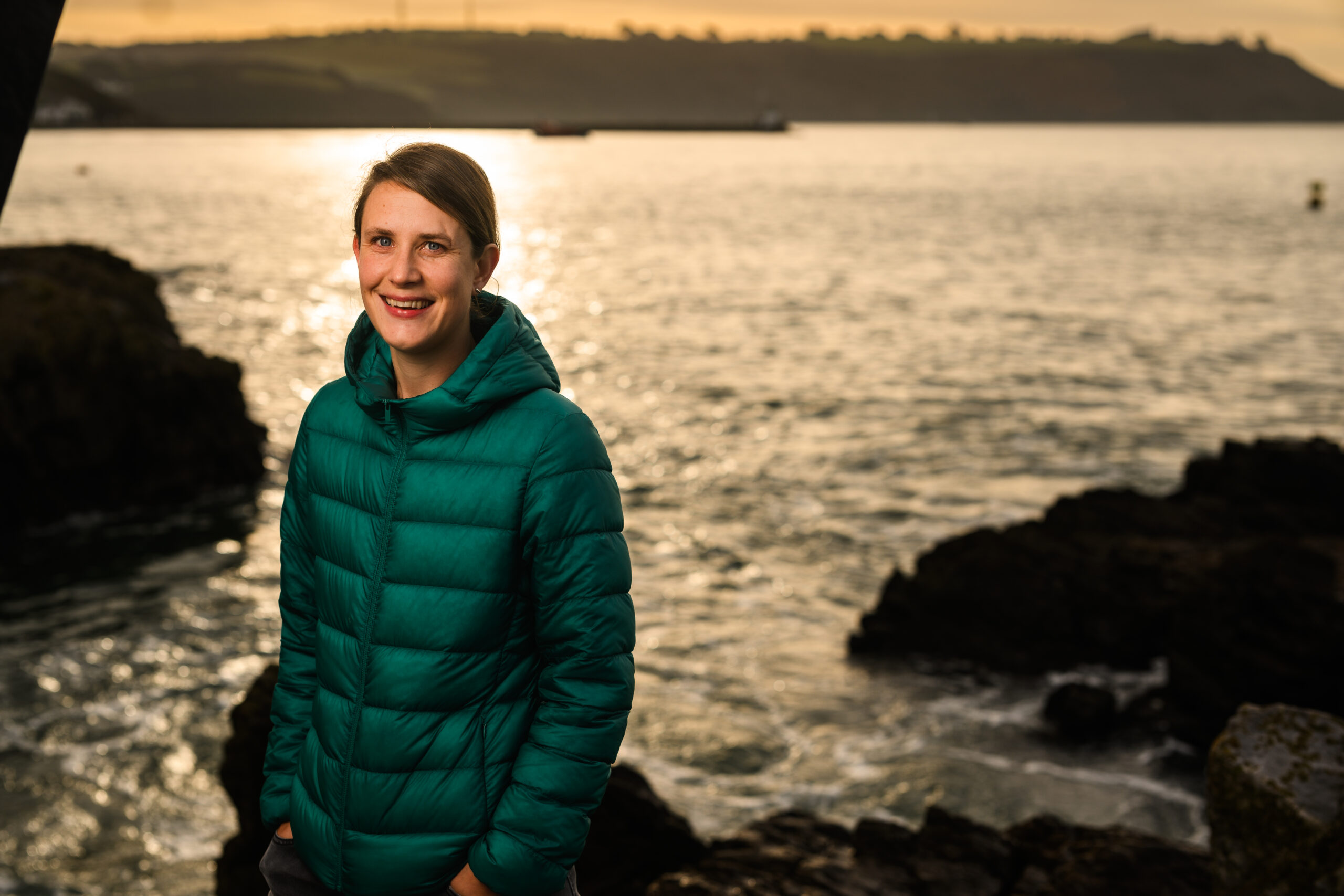
MBA Postgraduate Member Molly Blyth shares an honest insight into life as a marine biology PhD researcher, from conducting coral reef fieldwork in Indonesia and presenting at international conferences to navigating data analysis, deadlines and the day-to-day realities of postgraduate research.
If you were asked to picture a Marine Biology PhD researcher, you would probably imagine someone on fieldwork, whether that’s on a coral reef, a rocky shore, or a boat. Alternatively, you may imagine someone looking after species in aquaria or conducting dissections in a lab. The reality? Most days, I’m at my desk juggling various research tasks.
I’m Molly, and I’m now entering my third year of my PhD at the University of Plymouth. My research looks at understanding the impacts of soft coral dominance on coral reefs, particularly in North Sulawesi, Indonesia.
Soft corals are becoming more abundant on reefs in the Indo-Pacific, yet the impacts these organisms have on coral reef community composition and functioning is understudied. The aim of my PhD research is to begin to fill this research gap, using various techniques, from observational and manipulative experiments, to analysing large long-term datasets.
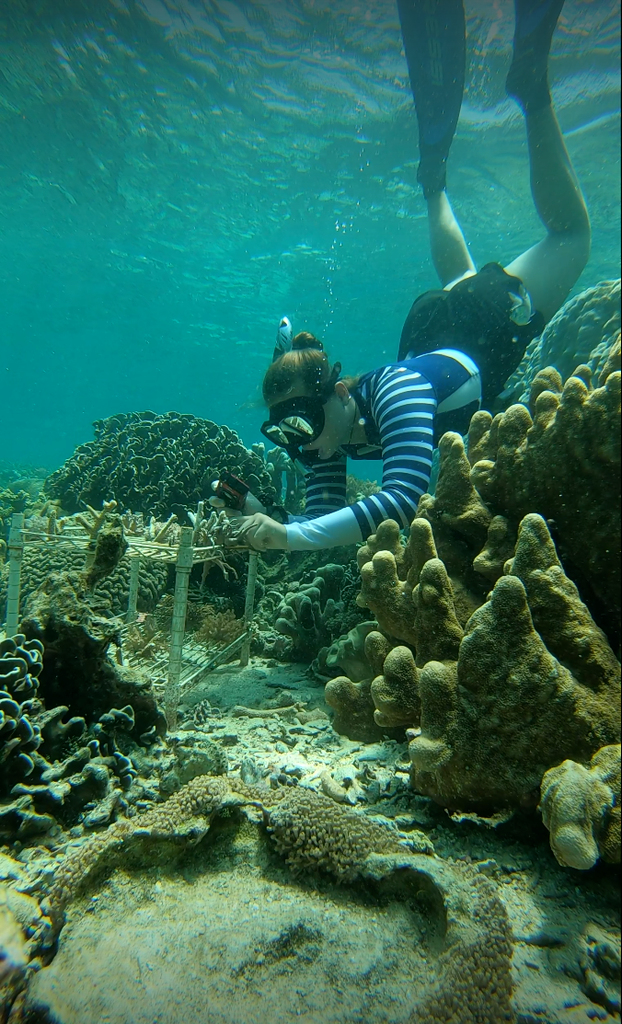
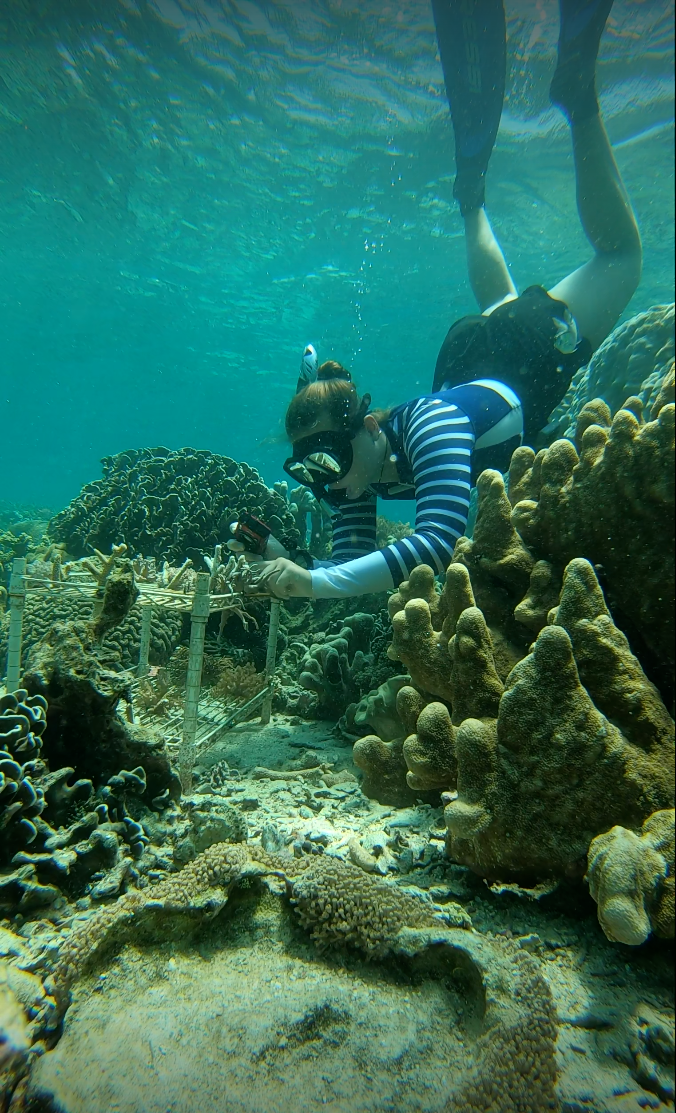
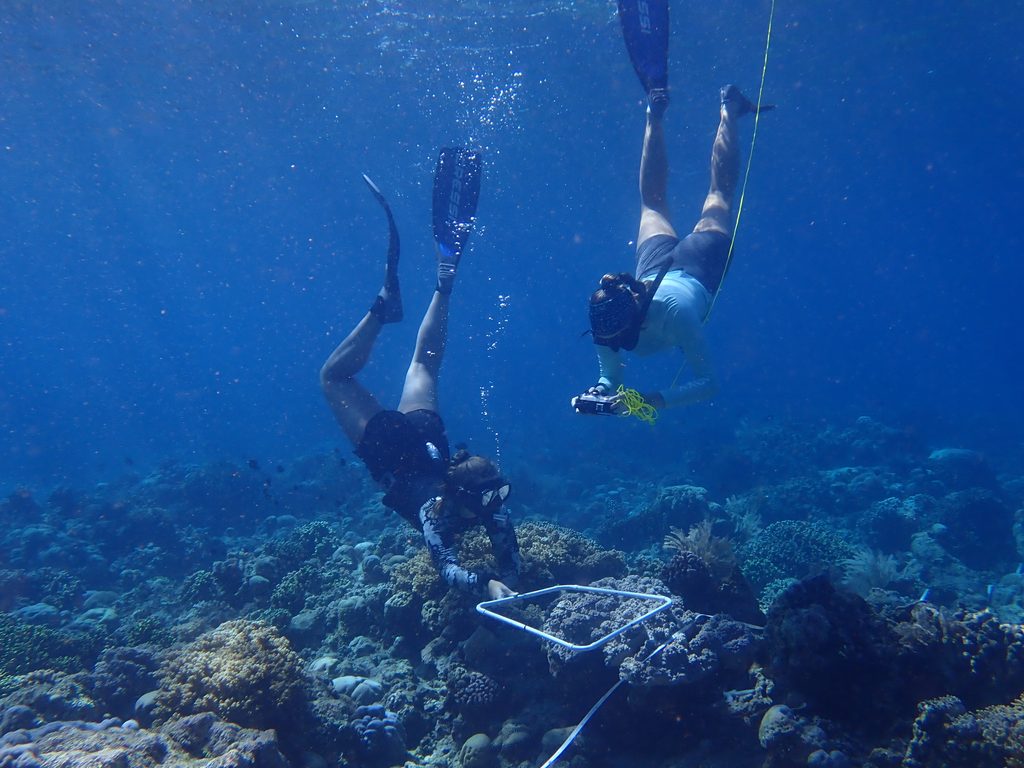
For the first three months of my PhD, I was straight into fieldwork at Coral Eye Marine Outpost in Indonesia, essentially being thrown in the deep end! During fieldwork my day-to-day was very intense, spending hours at a time snorkelling over the reefs, running benthic surveys and setting up, then running experiments. It’s exhausting, and a lot can and did go wrong, but I adapted and tried again and again… I made friends with the local marine life, including a confident staghorn damselfish (Amblyglyphidodon curacao), who watched and assessed me as I photographed my experiments, and a broadclub cuttlefish (Sepia latimanus) who would appear every day feeding in a Pachyseris mound at the beginning of my second snorkel, like clockwork!
After spending the day in the water, I would shower and dry off, then move to the conference room to present a short talk on the reefs and my research to resort guests, reminding me of the importance of research beyond just academia. Then dinner! On a typical day I would dine at the large communal table along with colleagues, guests and visiting academics, where the conversation matched the incredible Italian Indonesian fusion cuisine. I learnt a lot from those conversations, including about organisms I’d barely thought about, especially crinoids and nudibranchs. After dinner, I was usually so tired I only had enough energy to read before calling it a night!
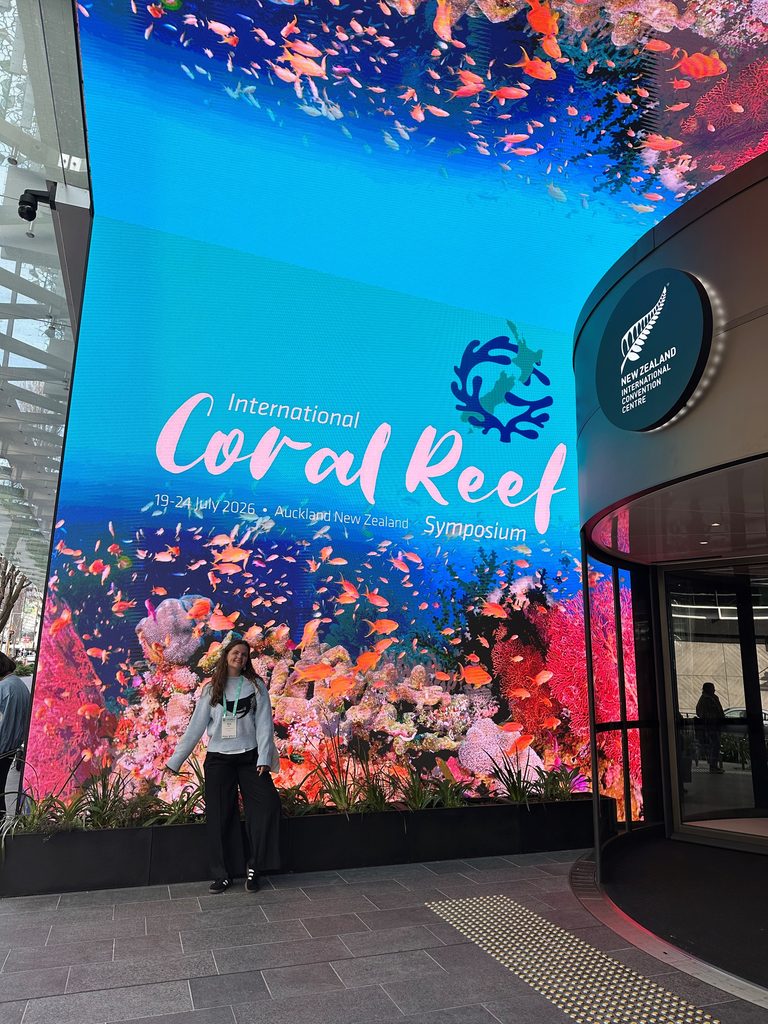
I recently returned from New Zealand, where I attended and presented a poster at the International Coral Reef Society Symposium 2026. Day-to-day life here looked vastly different to fieldwork. Whilst each day was still long and tiring, here I spent each day listening to various interesting talks in multiple sessions, then spending the breaks socialising and networking with fellow researchers. Once the scheduled day was up, I would join old and new colleagues for more socialising at dinner then drinks, with the days often not finishing until late at night. By the time I got back to my hotel I was exhausted, but excited for the next day of networking and learning about global coral reef research. This weeklong conference is another example of how life as a PhD student changes from one week to the next.
So far, my PhD is sounding very glamorous. However, since that burst of fieldwork, and other than the conference, all of my time has been office-based: analysing data, writing manuscripts, applying for numerous funding and planning the remainder of my thesis. This is the important bit, where the research comes together. Back in Plymouth, no two days or weeks look the same, it all depends on what the current priority is. Yesterday, for example, I went rockpooling to collect intertidal crabs with a fellow PhD researcher for their next experiments. Helping other PhD students is one of the perks, as it lets me expand my skills and dip into research that is very different to my own. Today, however, I spent the day at my desk grappling with R Studio and running models on large long-term datasets. The work only broken up with short coffee breaks and lunch with other PhD students, which goes on longer than it probably should!
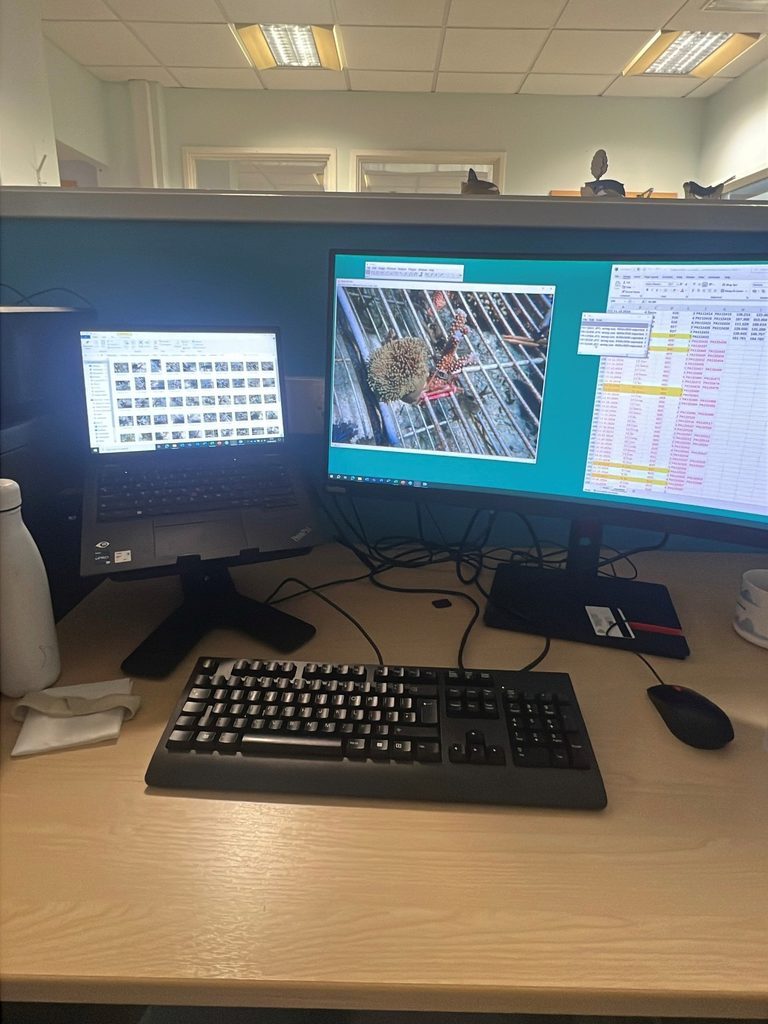
PhDs can be incredibly isolating, and for many PhD students, me included, imposter syndrome is a common problem. Across my office, everyone is working on something completely different and are at completely different stages of their PhD, yet it is too easy to compare yourself and your progress. But we all try to help each other. My postgrad community is very supportive, and I am very grateful for them all. Our daily lunches have since turned into outside-of-work barbeques and ceilidhs, and proper friendships. The best part of my day is the afternoon trip to get a coffee, or for me a sweet treat, and complaining about what has gone wrong or celebrating the wins of the day. PhD’s are full of so many ups and downs, just like a roller coaster. Whilst there are some things I would change if I could start again, I am so grateful and proud of where I am. I have an incredible supervisory team, I love my project and I am surrounded by a supportive post-graduate community. What more can you ask for when doing a PhD?
Keep updated with Molly and her PhD journey by following her on Instagram: @mollys_reef_rambles.