Communities across the UK are invited to join in with a nationwide rock pooling competition this spring, with the Big Rock Pool Challenge National BioBlitz 2026. Combining marine species discovery with competitive wildlife recording, the event brings people of all ages and backgrounds together with the common aim of exploring and recording the incredible biodiversity of our coastal shores.
Taking place from 23–31 May and led by The Rock Pool Project and the Marine Biological Association, the event challenges participants to head to their local coastline to uncover the fascinating life hidden in rock pools. Participants will receive a score for every species they find and compete to record the most exciting species, with unique regional and national prizes up for grabs.
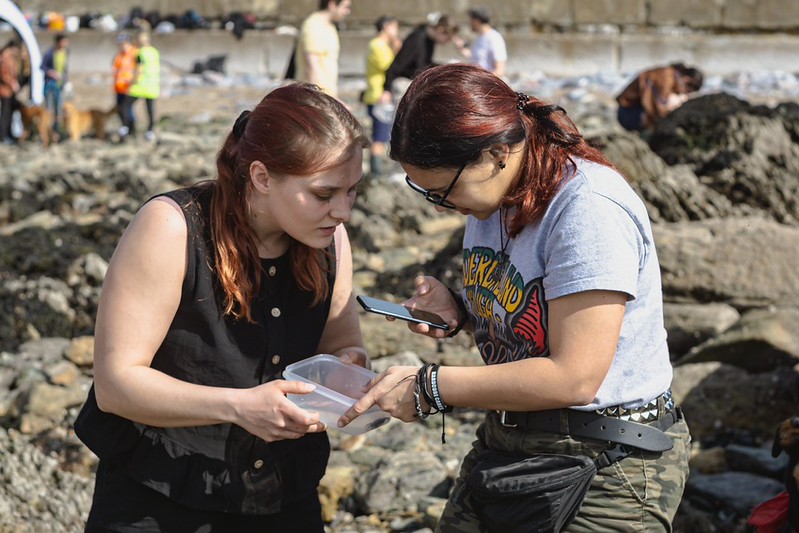
Rock poolers photographing their find to log on the iNaturalist app. c. The Rock Pool Project
A rock pooling challenge open to all
Open to individuals, families, schools, and community groups, the BioBlitz turns coastal exploration into a friendly, fun and competitive day out. Participants earn points for each species they record with the easy-to-use iNaturalist app, with rarer or harder-to-identify species, such as non-native discoveries, scoring higher.
Whether first-time rock pooler or seasoned wildlife enthusiast, anyone can take part, from a local beach visit to joining fun organised events across the UK.
Why these discoveries matter
Behind the competition lies a powerful purpose – helping marine scientists to build a clearer picture of UK marine biodiversity and track the spread of invasive non-native species. By encouraging thousands of people to record what they find hidden in their local rock pools, the National BioBlitz harnesses the enthusiasm and passion of these ‘citizen scientists’ across the country to drive marine research forward.
Over the last few decades, records of several non-native marine species around the UK coast have increased dramatically. Species such as Darwin’s barnacle, slipper limpet and wireweed are now being recorded far more frequently than in the past. This rise reflects both the spread of these species around UK shores and growing public involvement in marine wildlife recording. By contributing observations, citizen scientists are helping researchers track how our coastal ecosystems are changing over time.
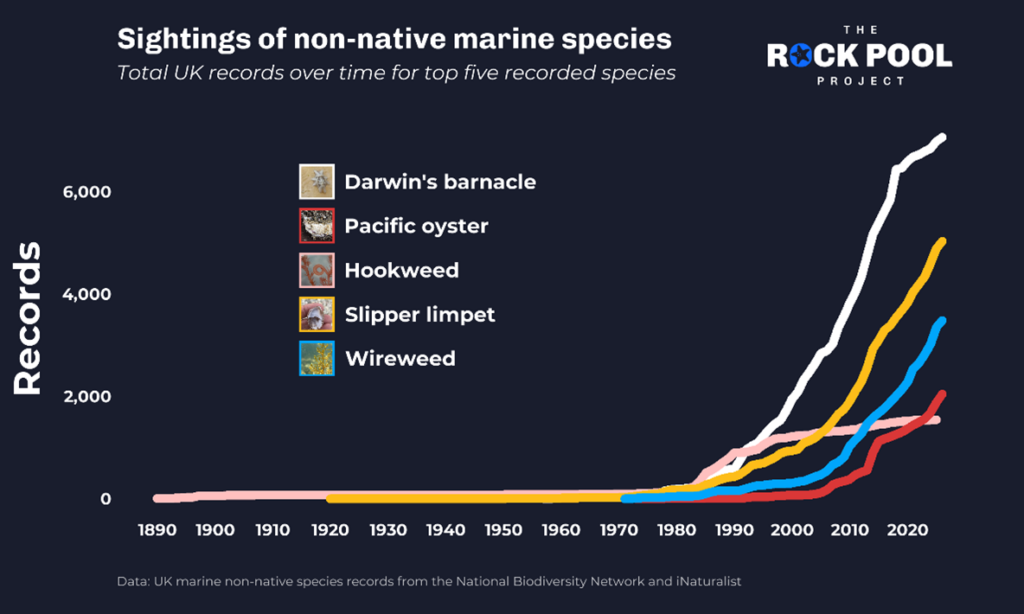
The total top 5 recorded UK species over time. c. The Rock Pool Project
Dr Ben Holt, CEO of The Rock Pool Project, said:
“This is about turning curiosity into action with a healthy bit of competition along the way! Whether you’re competing with your friends, exploring with your family, or just seeing what you can find, every record you upload helps build a national picture of life on our shores. There are some great prizes up for grabs, but the real reward is discovering the variety of amazing wildlife on your local coast.”
How it works
Participants can track their progress on live leader boards on the Rock Pool Project website, competing locally and nationally throughout the week. Prizes will be awarded for top performers, as well as for standout discoveries and contributions.
Participants simply:
- Visit a rocky shore anywhere in the UK
- Explore and photograph marine life in rock pools
- Upload their observations using the free iNaturalist app
- Watch their scores climb on the live leader board.
As we are particularly interested in non-native species – points for these records will be awarded double points! Bonus points are also available for covering locations that haven’t yet been investigated, so there are plenty of reasons to take part, with the exciting possibility of finding something rare that no one has ever seen before in an unexplored location.
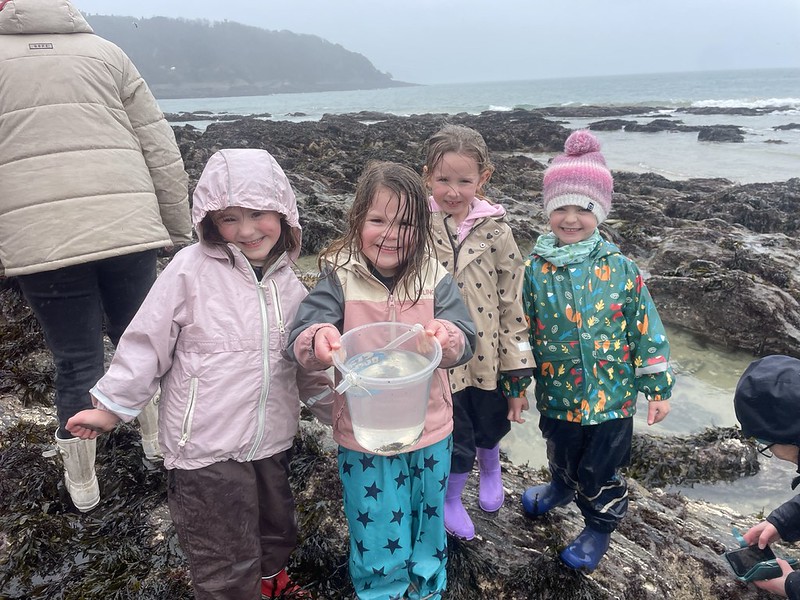
Young rock poolers happy with their catch of the day (shortly before releasing). c. The Rock Pool Project
Support from marine experts
A programme of live online sessions with marine experts will run throughout the week, helping participants to identify and learn about the species that they find. A large, friendly online community also helps participants to review their findings, while the iNaturalist app also has an excellent AI image recognition feature to help participants identify what they find.
The event builds on the success of the inaugural 2025 Big Rock Pool Challenge, which has already engaged communities across the UK to collect data on over 400 coastal species including 169 records of non-native species, helping marine scientists to track the biodiversity of species living in the UK’s rock pools.
Melanie Hill, Executive Officer and Trustee at the ScottishPower Foundation, said:
“It’s exciting to see communities across the UK coming together for the National BioBlitz 2026. After getting involved last year, I can’t recommend it enough as a fun, accessible way for people of all ages to get outside, explore their local coastline and connect with the incredible biodiversity living in our rock pools.
“As The Big Rock Pool Challenge continues to thrive into its second year, the project encapsulates exactly what the ScottishPower Foundation’s Marine Biodiversity Fund is here to support by inspiring curiosity and helping protect our seas for generations to come.”
To find out more and to sign up go to: