A new study indicates that major components of the animal nervous system are found in marine algae and play important roles in cellular communication.
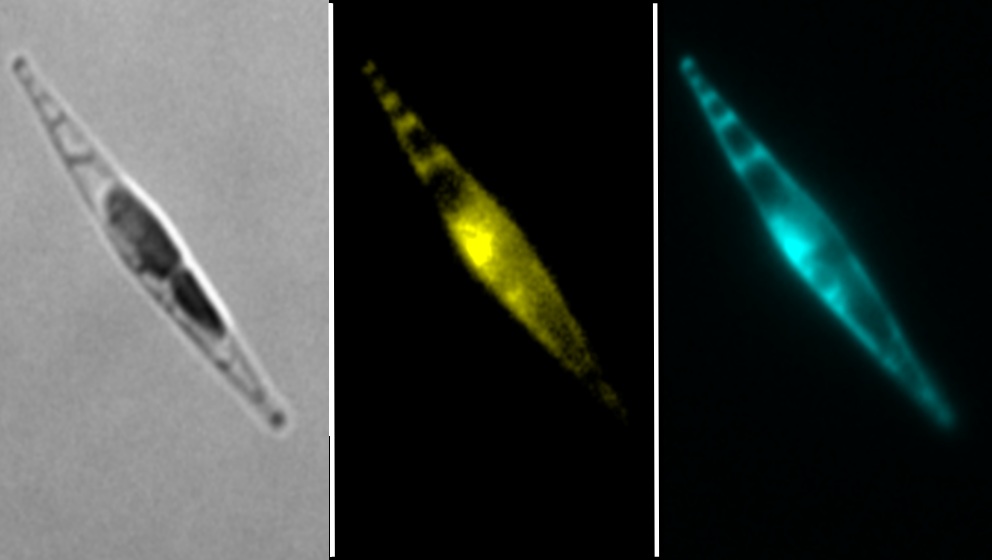
Multicellular organisms have developed many mechanisms to allow communication between individual cells. In animals, the amino acid glutamate acts as a neurotransmitter, allowing the transfer of information between neurons in the brain. Sensing of extracellular glutamate also plays an essential signalling role in plants, allowing long-range detection of wounding. Glutamate signalling therefore plays a key role in cell-cell communication in these multicellular organisms. However, we do not know how these highly complex signalling networks evolved, as the roles of glutamate signalling in unicellular eukaryotes remain largely unexplored.
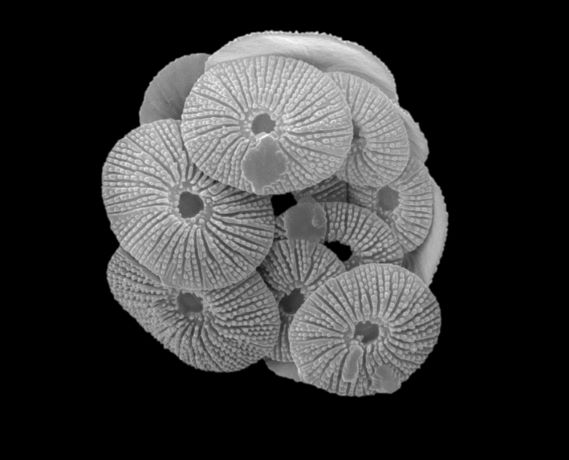
New research at the MBA, Glutamate as an extracellular signalling molecule in unicellular protists has provided major insight into the evolutionary origins of cellular communication. Research led by MBA PhD student Ellie Murphy demonstrated that unicellular algae also possess sophisticated mechanisms for communication between cells. The research identified that many unicellular algae possess ionotropic glutamate receptors, the proteins found in animal neurons that play such a critical role in neurobiology. Using pioneering molecular biology tools, the MBA team was able to demonstrate that glutamate induces rapid signalling responses in diatoms, an important group of marine algae.
The findings indicate an ancestral and widespread role for sensing extracellular glutamate amongst unicellular eukaryote organisms. These mechanisms likely represent the evolutionary precursor to the sophisticated signalling mechanisms found in multicellular organisms and underpin animal neurobiology.
In a further twist, the work has provided unexpected insight into the toxins produced by harmful algal blooms. Several diatom species produce domoic acid which is poisonous to animals because it interferes with glutamate receptors. The new research by the MBA shows that domoic acid can also interfere with glutamate signalling in non-harmful diatoms, suggesting that domoic acid production might also have an important role in disrupting marine microbial interactions.
Our understanding of cell-cell communication in unicellular organisms remains in its infancy. Glutamate is the most abundant amino acid in many eukaryote cells and so the ability to detect glutamate may have emerged in unicellular organisms as a mechanism to sense wounding of neighbouring cells. The next stage of the research will be to uncover these cellular roles in diverse marine phytoplankton.
The MBA was recently awarded a major research grant from the Leverhulme Trust to support this research. Postdoctoral Research Associate Dr Lucy Gorman will lead the next phase of this exciting research project.