Scientists at the Marine Biological Association (MBA) and the University of Exeter have uncovered a key mechanism that helps diatoms – the microscopic algae that underpin marine food webs – survive when one of life’s essential nutrients runs low.
The study, ‘A plasma membrane Ca2+-dependent protein kinase PtCDPK2 promotes phosphorus starvation resilience in Phaeodactylum tricornutum’, led by PhD researcher Dr Yasmin Meeda and senior author Dr Katherine Helliwell, identifies a calcium‑dependent protein kinase, PtCDPK2, that helps the model diatom Phaeodactylum tricornutum cope with phosphorus (P) starvation. Their findings shed new light on how phytoplankton sense and respond to changing nutrient conditions in the ocean.
Diatoms are responsible for around 40% of marine primary production, fuelling fisheries, supporting marine biodiversity, and helping to regulate Earth’s climate through carbon cycling. Understanding how they adapt to fluctuating nutrients is essential for predicting how marine ecosystems will respond to environmental change.
“I wanted to further understand diatoms’ metabolism and how they respond when nutrients in the ocean change. Conditions in the ocean are constantly shifting, so uncovering how diatoms sense and adapt to those changes felt like an exciting puzzle to explore,” explains Yasmin.
Why phosphorus matters
Phosphorus is a vital building block for all life: it forms part of DNA, cell membranes, and energy molecules such as adenosine triphosphate (ATP). However, in many parts of the ocean, P is in short supply. When P runs out, diatoms must activate an emergency ‘starvation response’ to survive.
Earlier work by MBA researchers showed that diatoms use bursts of calcium inside the cell to detect when phosphate becomes available again. But it was unknown how diatoms decode those environmental signals, how they coordinate their starvation responses.
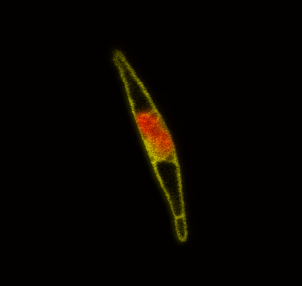
The researchers discovered that PtCDPK2, a calcium‑dependent protein kinase, becomes ‘switched on’ when diatoms experience low phosphorus. Using fluorescence tagging, they showed that PtCDPK2 sits at the cell’s plasma membrane, positioning it perfectly to help the cell sense and respond to environmental changes.
“Like all living things, diatoms need nutrients to survive. One of those nutrients is phosphorus, which is a bit like an essential vitamin in their diet. The form of phosphorus that they can easily use is phosphate, and when this becomes limited in the ocean, diatoms need ways to sense that reduction and adjust how their cells work so they can survive,” Yasmin explains. “In our research, we found that a protein called PtCDPK2 helps diatoms cope when phosphate levels drop. It acts a bit like a regulator that helps the cell manage its metabolism during tough conditions, making sure the diatom can keep functioning until nutrients become available again.”
Key findings
PtCDPK2 acts as a phosphorus‑stress responder:
- The protein is strongly switched on when phosphorus levels drop.
- Its expression rises even before growth slows, indicating early detection of P stress.
It is linked to the diatom’s calcium‑signalling machinery:
- PtCDPK2 levels increase when cells are capable of generating P‑induced calcium signals, suggesting it helps interpret those signals.
Cells lacking PtCDPK2 struggle under P starvation:
Using CRISPR‑Cas9, the team engineered diatom strains missing the PtCDPK2 gene. These mutants:
- Showed reduced photosynthetic efficiency (lower Fv/Fm values)
- Had dramatically reduced alkaline phosphatase activity (an enzyme needed to liberate P from organic molecules)
- Became more physiologically stressed during extended P starvation
- Recovered more poorly when phosphate was restored.
Taken together, these results show that PtCDPK2 helps diatoms maintain their health during nutrient shortages, which is an essential survival trait in the ever-changing ocean.
What this means for marine life and for us
They may be microscopic, but diatoms play a major role in supporting life on Earth. Insights into how they survive nutrient stress have wider implications:
- Marine productivity and food security
Diatoms form the base of marine food webs. If they struggle during nutrient shifts, it can ripple up to zooplankton, fish, seabirds, and marine mammals. - Ocean biogeochemistry and climate regulation
Diatoms help draw carbon dioxide out of the atmosphere. Their ability to thrive in low‑nutrient waters affects how much carbon the ocean can naturally store. - Predicting ecosystem responses to change
- Human activities are altering nutrient inputs into the sea, through pollution, climate‑driven changes in mixing, and shifts in runoff patterns. Understanding how diatoms detect and adapt to these changes improves our ability to forecast ecological impacts.
- Discovery of new molecular pathways with potential implications for biotechnology
- Diatoms use nutrient‑sensing mechanisms distinct from those in plants and green algae, offering opportunities for new biotechnology and research into how marine microbes regulate nutrient cycles. Microalgae also provide promising solutions for cleaning phosphate pollution from sewage and industrial waste, helping reduce agricultural run‑off impacts while enabling sustainable phosphorus recycling. As global phosphorus reserves decline, understanding the conditions and mechanisms that support algal phosphorus uptake is crucial for developing these technologies.
A step forward in understanding life in a nutrient‑limited ocean
This research reveals that PtCDPK2 acts as a key regulator of the diatom phosphorus‑starvation response, which essentially helps these microscopic powerhouses to survive and bounce back when nutrients are scarce.
“Diatoms are tiny, but they play a huge role in the ocean. Understanding how they cope when nutrients become scarce helps us predict how marine ecosystems might respond as climate change and human activities alter the chemistry of our oceans,” Yasmin adds.
By illuminating how diatoms sense and respond to their environment, the study strengthens our broader understanding of the marine carbon cycle and the resilience of ocean ecosystems.
The work was supported by the Natural Environment Research Council (NERC) and the Biotechnology and Biological Sciences Research Council (BBSRC), with additional support from a jointly funded University of Exeter-MBA PhD studentship.